A-Frame Signs in Toronto: Which Rigid Board to Print On
November 12, 2026
Presentation Folder Printing in Toronto: How to Spec One
November 15, 2026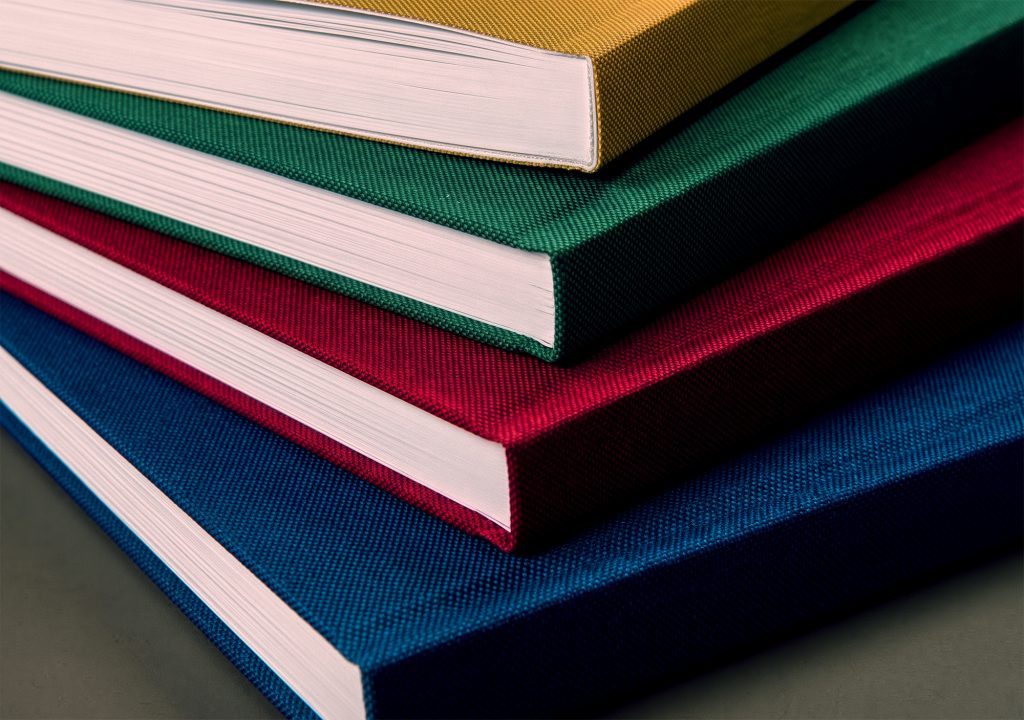
Booklet Binding in Toronto: Saddle Stitch or Perfect Bound
Most multi-page print jobs are specified backwards. The design is finished, the page count lands wherever it lands, and the binding gets chosen in the last ten minutes before the quote goes out. That order is why catalogues arrive with cropped margins near the spine, why a 66-page program cannot be stapled, and why a manual that lives on a workbench will not stay open at the page someone needs.
Binding is a production decision, and it is the one that most affects both the cost and the feel of the piece. C17 Media prints and binds catalogues, brochures, magazines, manuals, look books and event programs in-house in Richmond Hill, saddle-stitched, perfect-bound or coil, in runs of fifty or fifty thousand. This is how to pick the bind before the layout is locked, so the piece you order is the piece you get.
The short version
- Page count is the first gate. Saddle stitch works to roughly 64 pages. Perfect binding suits about 40 pages and up. Coil and Wire-O take any count.
- A saddle-stitched page count must divide by four. Nothing else in the job can change that.
- Shelf life decides the upgrade. A piece read once goes stitched. A piece that sits on a shelf with its title showing goes perfect-bound.
- Anything used hands-free on a bench, a counter or a vehicle seat goes coil or Wire-O, because those are the binds that stay open.
- Ask for a bound dummy on the real stock before the run. A page-order error found on a dummy costs nothing.
The three binds, and the job each one is for
There are three binding families in commercial booklet work, and they are not interchangeable. Each one answers a different question about how the finished piece will be handled.
Saddle stitch is wire stapled through the folded spine. The sheets are nested one inside another, folded together and trimmed on three sides. It is the cheapest and fastest bind, it lays flat when opened, and it is the standard for programs, newsletters, short catalogues and periodicals. On a booklet and catalogue run it is the default unless something in the brief rules it out.
Perfect binding glues the pages into a squared spine you can print on. That printable spine is the whole point: it is what lets the piece sit on a shelf with the title visible, and it is what makes an annual report or a thick product catalogue read as a real book rather than as a handout. It costs more than stitching, and it takes longer, because the glue has to cure before the book is trimmed.
Coil and Wire-O punch the pages and thread them onto a plastic coil or a double wire loop. The piece opens a full 360 degrees and stays open where you put it. For training manuals, technical documentation and reference guides, that behaviour is not a nicety; it is the reason the format exists.
Page count is the first gate, not the last detail
Before anything else about the piece is decided, count the pages. The number rules in and rules out more than stock, cover finish or quantity ever will.
Booklet binding at a glance
The four numbers that decide a multi-page job
Working limits C17 Media publishes for booklet, catalogue and manual work.
~64
pages: the practical ceiling for saddle stitch, depending on stock thickness
40+
pages: where perfect binding starts to make sense
÷ 4
every saddle-stitched page count divides by four, with no exceptions
5–8
business days: typical for a straightforward saddle-stitched booklet from approved files
Between roughly 40 and 64 pages the two main binds overlap, and that is the band where the decision is actually about the piece rather than about the limits. Under 40 pages, saddle stitch is almost always right. Over 64, the staple stops being an option and the conversation moves to glue or coil.
Why a saddle-stitched page count has to divide by four
A saddle-stitched booklet is built from folded sheets. One sheet, printed both sides and folded once, gives four pages. There is no way to add a single page to that structure, which is why the total has to divide by four: 8, 12, 16, 20 and so on.
This catches people late. A 30-page brochure is not a brochure a stitcher can make. It becomes 28 pages or 32, and that choice is a content decision, not a bindery one. Deciding it in pre-press means someone at the printer is cutting or padding your editorial, usually on the day the job was supposed to run. Deciding it while the layout is still open means you choose which spread goes and which stays.
Perfect binding and coil have no such rule. Any page count works, which is part of why a long catalogue with an awkward total often ends up glued even when the page count alone would allow stitching.
Creep, and the margins that disappear near the spine
Nested folded sheets do not sit flush. The inner sheets push outward against the fold, so by the time the book is trimmed, the innermost spreads have lost more off their outer edge than the outermost spreads have. That shift is called creep, and it grows with page count and with stock thickness.
What it looks like on the finished piece: page numbers that drift toward the trim in the middle of the book, an outer margin that is visibly tighter on the centre spread, and an image that was meant to cross the gutter landing a few millimetres off register. The fix is creep compensation at imposition, which C17 Media’s pre-press team applies as part of the booklet pre-press check, along with page order and bleed.
What it asks of your file is simpler: keep live text and anything that must line up clear of the trim and the gutter, and supply pages as single pages rather than as pre-imposed spreads. If a designer has built reader spreads to look right in a PDF, pre-press has to take them apart again before the job can be imposed. Our post on why print files fail covers the rest of that handoff.
When the spine is worth the money
Perfect binding costs more than stitching and adds time to the schedule. It is worth it when one of three things is true.
The piece has to be found again. On a shelf, in a sales bag, in a procurement office, a square printed spine is the only part of the book anyone sees. A stitched booklet in the same stack is a fold with nothing written on it.
The piece is the pitch. Weight and a square edge register before a word is read. For a capital campaign document, an annual report or a high-end look book, the bind is part of what the piece is saying about the organization that sent it.
The piece has a shelf life measured in years. A product catalogue that stays in circulation through a full season or a full model year takes more handling than a program handed out once. Specify for the handling, not for the launch.
If none of those is true, the money is better spent on stock or on cover finishing, where a reader will notice it immediately.
Manuals: the case for coil and Wire-O
A technician holding a part in one hand cannot hold a book open with the other. That is the whole argument for coil and Wire-O, and it is why training manuals, service documentation and reference guides in automotive, retail and QSR operations are bound that way almost without exception.
Coil and Wire-O also take any page count, accept tabbed dividers, and allow a section to be reprinted when documentation is revised instead of reprinting the whole manual. For multi-location operators running versioned documentation, where sections differ by region or by model, that last point is usually the one that decides it.
The trade-off is appearance. There is no printable spine, and the piece reads as a working document rather than as a presentation piece. For a manual that is the correct signal.
Where the press changes, and what that does to the bind
Quantity picks the press, and the press affects what the bind costs. Short runs — fifty look books for a showroom, a hundred programs for an event — print digitally and stay affordable, with no meaningful minimum. Past a few thousand copies, offset drops the per-unit cost substantially and holds Pantone colour precisely across the entire run. We set out the full comparison in digital versus offset printing, and the run-size maths for long jobs in our guide to bulk brochure printing in Ontario.
The practical point for a multi-page job is that binding is a per-copy operation on every press. Doubling the quantity roughly doubles the bindery time, where it does not double the plate cost on offset. On long runs the bind is a larger share of the unit cost than most buyers expect, and that is a reason to be deliberate about it rather than a reason to default to the cheapest option.
Colour is the other thing that changes with the press. If this catalogue has to match last year’s, or match a package and a POP display printed on different equipment, say so at quote stage. Brand colour consistency is a pre-press decision, not a reprint.
What to settle before files go to the press
Six things, in this order. Settling them early is the difference between a quote that holds and a quote that moves.
- Final page count, including the cover, and whether it divides by four.
- How the piece will be handled: read once, carried in a bag, shelved for a year, or used flat on a bench.
- Stock for the text and the cover. Coated stocks hold detail in fine product imagery; a heavier cover changes both the feel and the creep.
- Quantity, and whether it is one drop or several. Long runs can be printed once and held, then released in staged quantities as the campaign needs them.
- Distribution counts. Bundles shrink-wrapped in the counts your distribution actually uses save someone counting by hand at the far end.
- The proof you want. A PDF proof checks content. A bound dummy on the real stock checks the object.
C17 Media runs pre-press, printing, folding, collating, stitching, gluing and coiling in-house in Richmond Hill, which is why these answers can change late without a job going to the back of an outside bindery’s queue. Multi-page deadlines usually slip in that queue, not at the press.
Frequently asked questions
What is the difference between saddle stitch and perfect binding?
Saddle stitch staples the booklet through the folded spine. It is the cheapest and fastest option, it lays flat when opened, and it works up to roughly 64 pages depending on stock thickness, with a total page count that must divide by four. Perfect binding glues the pages into a squared spine you can print on, which reads as a proper book and suits anything from about 40 pages up. It costs more and takes longer, but for a catalogue that lives on a shelf for a year it is usually worth it.
How many pages can a saddle-stitched booklet hold?
Roughly 64, depending on how thick the stock is. Past that the staple stops holding the fold cleanly and the book will not sit closed. The other rule is arithmetic: because each folded sheet makes four pages, the total has to divide by four.
Is there a minimum quantity for booklet printing?
No meaningful minimum. Short runs such as fifty look books for a showroom or a hundred programs for an event print digitally and remain affordable. Long runs move to offset, where the per-unit cost drops sharply. We will tell you where that crossover falls for your specific page count and stock.
How long does a booklet or catalogue take to produce?
A straightforward saddle-stitched booklet typically runs five to eight business days from approved files. Perfect binding adds time for the glue to cure and trim. Long offset runs, specialty covers and coil binding are quoted with firm dates.
Can we see a proof before the whole run prints?
Yes, and for multi-page work we recommend more than a PDF proof. We can produce a bound dummy on your actual stock, so you can hold the real weight, check how the spine behaves when it is opened flat, and confirm page order before committing to the full run.
Which bind suits a training manual?
Coil or Wire-O, so the manual opens a full 360 degrees and stays flat on a bench, printed on stocks durable enough for shop-floor use. Manuals are often produced in versioned runs where sections differ by region or model, and individual sections can be reprinted as documentation is revised. Tabbed dividers are handled in the same bindery.
Bringing a multi-page job to C17 Media
Send the page count, the stock you have in mind, the quantity and one line about how the piece will be handled. That is enough to come back with a bind recommendation and a price, and to tell you whether your job sits on the digital press or the offset press. See the full booklet, catalogue and brochure printing service, the rest of our digital and offset printing work, or get in touch from our Richmond Hill facility at 30 West Beaver Creek Rd, Unit #12.