Bulk Brochure Printing in Ontario: Run Sizes, Presses and Folds
September 28, 2026
Floor Graphics for Retail and QSR Stores: Surfaces, Slip Ratings and Removal
September 30, 2026
Custom retail wallpaper printing is the fastest way to change what a store looks like without changing the store. A printed wall goes up in a day, comes down when the campaign ends, and costs a fraction of the millwork it replaces. The part buyers get wrong is not the image. It is the material, the seams, and the schedule.
C17 Media prints wall coverings at grand format in Richmond Hill and installs across the Greater Toronto Area with its own crews. This guide covers what to decide before you send artwork, so the quote you get back matches the wall you actually have.
The short version
- Decide the intended lifespan first. Removable wall films are built for seasonal campaigns; commercial wallcovering is an interior finish meant to stay.
- A long wall should be one continuous image, not tiled panels with joins through the middle of a face.
- Textured, cinder block and brick walls need conformable materials and a site assessment. Quoting from a photo is how jobs fail.
- Printing every location in one run is what makes every location match. Files printed months apart drift in colour.
- Printed graphics and architectural film are different products. One puts an image on the wall; the other puts a wood, stone or metal finish on it.
What retail wallpaper printing actually covers
“Retail wallpaper” is a loose term for several different products, and the difference matters at quote stage. C17 Media groups the work this way on its wall and ceiling graphics service:
- Custom printed wallcovering — full-wall and full-room coverage on commercial-grade materials, from a subtle brand pattern to photographic imagery.
- Retail wallpaper and seasonal campaigns — campaign graphics designed to be swapped on a cycle, produced for multiple locations in one run.
- Feature walls and murals — grand-format single walls for showrooms, restaurants and store interiors.
- Ceiling graphics — the surface customers look at while they queue, and the one almost nobody prints.
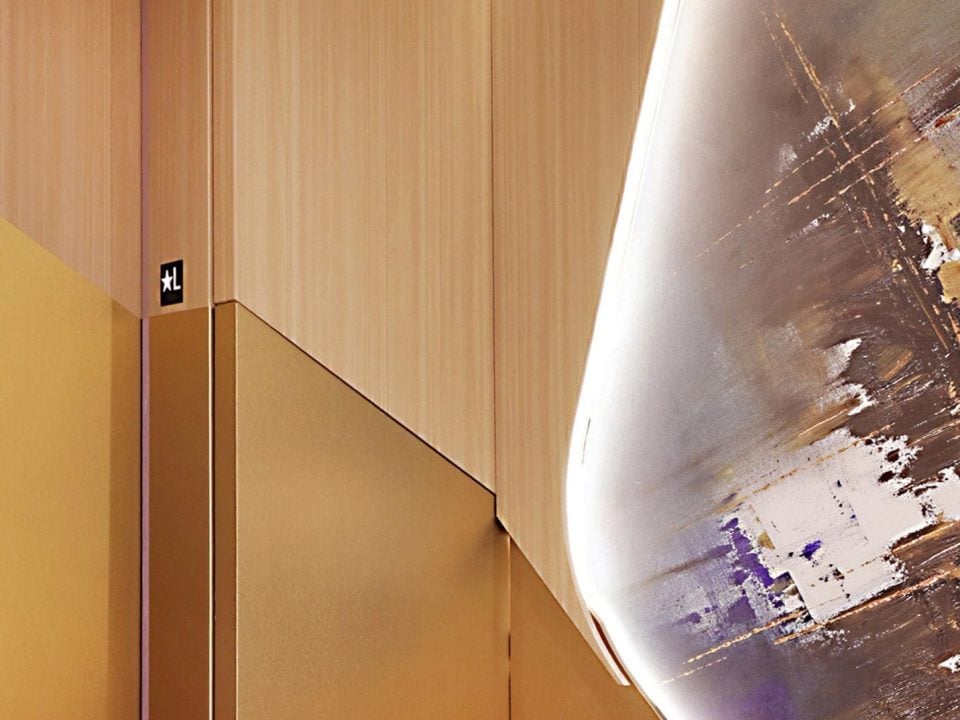
- Wall panels and 3M™ DI-NOC™ surfaces — architectural film on panels, columns, millwork and reception surfaces, where the brief is a wood, stone or metal finish rather than a graphic.
That last one is the distinction worth holding on to. If the wall needs to carry a photograph, a pattern or a campaign message, you are buying printed wallcovering. If it needs to stop looking like painted drywall and start looking like walnut, you are buying architectural finishes, and C17 Media states that the DI-NOC films it installs are Class A fire-rated — a question worth asking of any material going into a commercial interior.
Pick the material before you pick the image
The substrate decides whether the job survives. C17 Media splits retail wall materials into three cases, and the right answer comes from how long the graphic is meant to live and what it is going onto.
Commercial wallcovering is durable and cleanable, and it suits corridors, entrances and high-traffic areas where the graphic is a long-term part of the interior. This is the choice when the wall is part of the store design rather than part of a campaign.
Removable wall films are made for work that has to come down cleanly and go back up on the same wall, repeatedly. If your merchandising calendar changes the wall four times a year, this is the material that makes that affordable instead of destructive.
Textured and difficult surfaces — cinder block, brick, heavily textured drywall — need specific conformable materials and an honest conversation about how much texture will still show through. C17 Media assesses the actual wall before quoting. The failures in this category, in their words, almost always trace back to someone quoting from a photo.
One question settles most of this: how long is the graphic meant to stay up? Tell the printer the intended lifespan before you tell them the design, and the material specification follows from it rather than being guessed at afterwards.
Seams: a long wall should read as one image
Traditional wallpaper arrives in rolls and goes up in strips, so a join every so often is normal. A printed brand wall is judged differently. A seam running through a face, a logo or a product shot is the first thing a customer notices and the only thing a regional manager will mention.
C17 Media prints at grand format on ultra-wide presses, which means a long wall can be produced as one continuous image rather than tiled panels. Where a wall genuinely exceeds even that width, the panel breaks are planned into the artwork and placed at architectural features — a column, a corner, a change of plane — so the transitions look deliberate.
When you brief the job, give the printer the wall width and the location of every obstruction: light switches, outlets, fire equipment, door frames, a thermostat. Those are the points where a break can hide, and they are also the points where a badly planned print looks wrong.
Printing every location in one run
A single store is a print job. Twenty stores is a program, and it fails in a specific way: the graphics stop matching. Files sent to different shops in different months drift in colour, and by the second campaign cycle the brand red in one location is not the brand red in another.
The fix is boring and reliable. Produce the full multi-location campaign together in one run, then kit and ship per store. C17 Media does this from one building in Richmond Hill — design, pre-press, production, kitting, fulfilment and installation under one point of accountability — and its own description of the outcome is that the graphic is identical in Scarborough and in Calgary.
It also pays to plan the wall alongside every other printed surface in the store. Window graphics, decorative glass film, fabric displays and point-of-purchase pieces all carry the same brand colours, and running them through one colour standard and one install schedule is cheaper than correcting a mismatch later. Our guide to environmental graphics printing in Ontario covers how those surfaces work together across a whole space.
How long a store is out of action
This is usually the number that decides the project, because trading hours are the real budget. Most single feature walls and murals are installed in a day. A full retail interior or a corridor program typically runs one to three days, depending on scope and access. C17 Media works evenings and outside trading hours for retail and hospitality clients, so the space does not lose a day of business.
Retail wall graphics at C17 Media
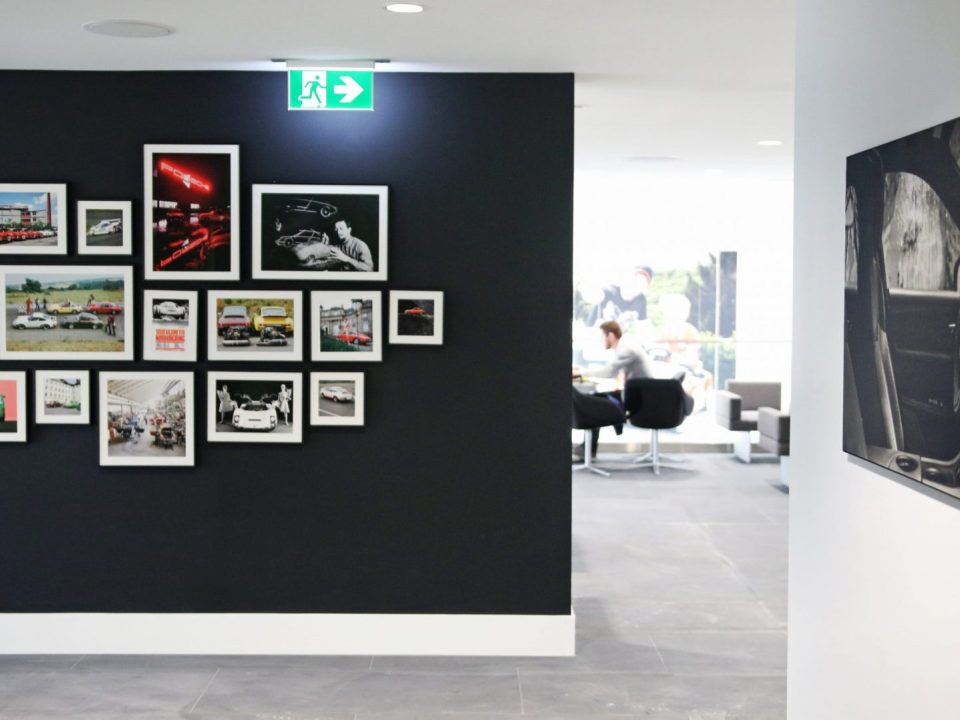
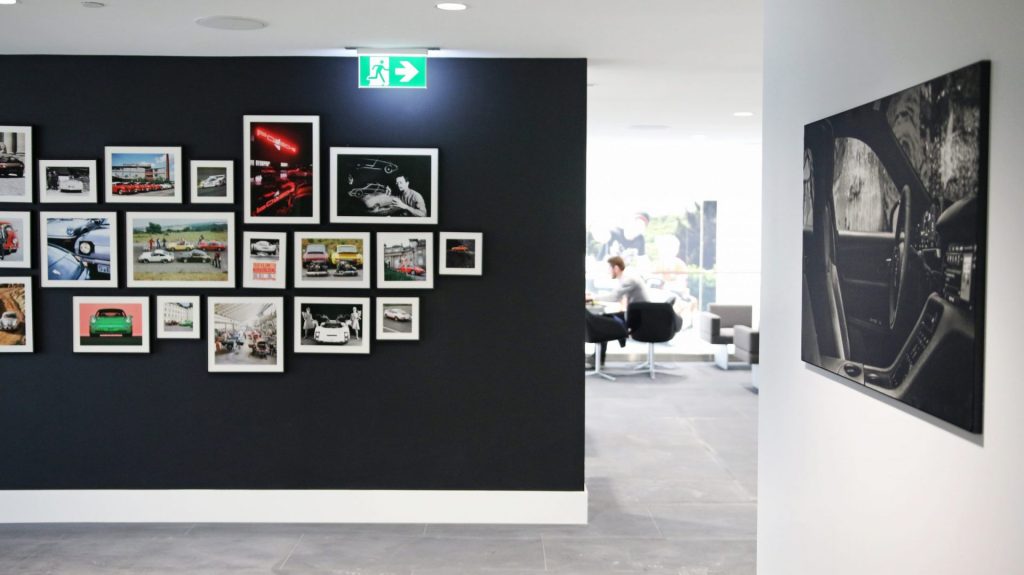
What the schedule and the shop look like
The four figures a retail buyer usually asks for first, taken from C17 Media’s own published description of the service.
1 day
Typical install for a single feature wall or mural
1–3 days
A full retail interior or corridor program, by scope and access
19,000+
Square feet of production facility in Richmond Hill
Since 2011
A creative print partner to brands including Shiseido, Shopify and Hudson’s Bay
Artwork: what changes when an image goes to wall scale
An image that looks correct on a monitor frequently is not correct at four metres wide. Resolution is the obvious problem. The less obvious ones are compression artefacts that were invisible at thumbnail size, skin tones and gradients that band once they are enlarged, and type that was set for a page and now has to be legible from across a store.
C17 Media will work either way: its in-house design team can develop the wall from your brand guidelines and produce the scaled artwork, or take your designer’s files and handle the scaling, resolution and colour work needed to take an image to wall size. The pre-press team is the checkpoint that catches a file that will not hold up before it is printed rather than after.
Two practical notes for the brief. Give the printer real measurements from the wall, not from the architectural drawing, because as-built and as-drawn are rarely the same. And say where the customer stands. A graphic read from two metres away needs different detail from one read from across a showroom floor.
What to have ready before you ask for a quote
- Wall dimensions, measured on site, plus the position of switches, outlets, doors and fixtures.
- The surface — smooth drywall, lightly textured drywall, block, brick, existing wallcovering — and a photograph of it, understanding that the photo supports the assessment rather than replacing it.
- Intended lifespan: a six-week campaign, a seasonal cycle, or a permanent interior finish.
- Number of locations, and whether the artwork is identical at each one or sized per store.
- Access and hours: when crews can be on site, and whether the work has to happen outside trading hours.
- Artwork status: finished files, a design in progress, or a brand guideline and a brief.
Those six answers are what turn an estimate into a quote you can actually build a schedule around.
Frequently asked questions
Is printed retail wallpaper the same as regular wallpaper?
No. Regular wallpaper is a manufactured pattern supplied in rolls. Custom retail wallpaper printing produces your own artwork at grand format on commercial materials, so the image is continuous across the wall and specified for the traffic, the surface and the intended lifespan.
Will the graphic have visible seams across a long wall?
On a properly produced job, no. C17 Media prints at grand format on ultra-wide presses, so a long wall can be produced as one continuous image. Where a wall exceeds even that width, panel breaks are planned into the artwork at architectural features rather than through the middle of a face.
Can retail wall graphics be removed without damaging the wall?
With the right material, yes. Removable wall films are made for seasonal campaigns that come down and go back up repeatedly on the same wall. Long-term commercial wallcovering is more permanent by design. Tell the printer the intended lifespan and the material is specified accordingly.
Can you print onto textured or brick walls?
Often, but the material has to suit the surface. Lightly textured drywall is straightforward. Cinder block, brick and heavily textured surfaces need specific conformable materials and realistic expectations about how much texture will show through. C17 Media assesses the actual wall before quoting.
How do you keep the graphics matching across every store?
By printing the full multi-location program in one run, then kitting and shipping per store. Files printed months apart at different shops drift in colour; produced together, every location matches.
Do you install, or do we arrange that separately?
C17 Media installs with its own certified crews across the Greater Toronto Area, and schedules around trading hours for retail and hospitality sites.
Start a retail wall project
If you are planning a store refresh, a seasonal campaign or a rollout across several locations, the useful first step is a wall assessment rather than a price list. C17 Media prints and installs wall and ceiling graphics from 30 West Beaver Creek Rd, Unit #12, Richmond Hill, Ontario L4B 3K1, Monday to Friday, 9:00 a.m. to 5:30 p.m. Reach the team at 905.597.2178 or hello@c17media.com, or use the contact form and say how many walls, how many locations, and how long the graphics need to last.