
Does Your Lobby Cost You Deals Before Meetings Start?
July 24, 2026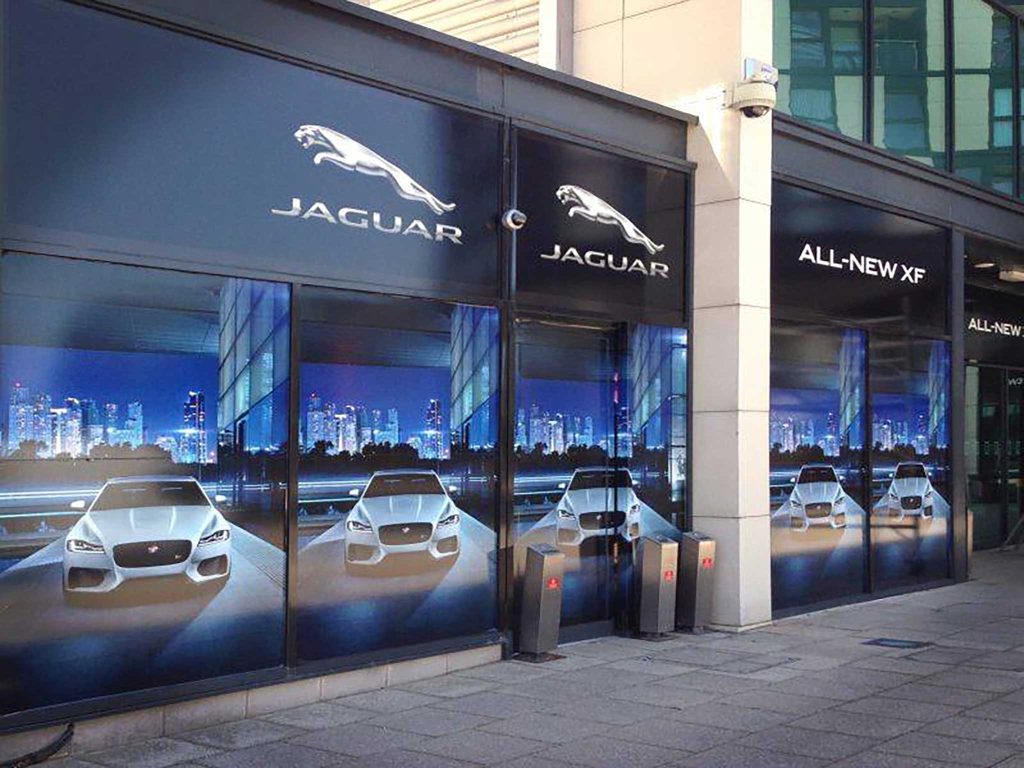
Environmental graphics printing turns the walls, windows, floors, and architectural surfaces of a space into branded, printed experiences. For an Ontario business, that means a lobby that closes deals, a storefront that stops foot traffic, and an office that looks like the brand instead of a rental. This guide covers what environmental graphics printing is, the formats that matter, the materials that last, and how to pick a Richmond Hill or Greater Toronto Area (GTA) partner who prints and installs it right.
If you manage a facility, a retail brand, or a marketing budget in the GTA, this is the practical version. No fluff, just what the work involves and what to ask for.
Key Takeaways
- Environmental graphics printing covers wall murals, window graphics, floor graphics, wayfinding, and architectural films that brand a physical space.
- The global large-format printing market is worth USD 12.68 billion in 2025 and is projected to reach USD 16.02 billion by 2030, so the supply chain behind these graphics is mature and well proven.
- Signage drives measurable behaviour: a FedEx Office survey found 76% of consumers entered a store they had never visited because of its signs, and 68% bought because a sign caught their eye.
- Material choice decides lifespan. Latex and dye-sublimation printing on the right substrate holds colour indoors for years, and eco inks cut the environmental cost.
- In Ontario, choose an in-house printer with 3M DI-NOC certification, GTA installation crews, and colour-managed proofing, such as C17 Media in Richmond Hill.
What Is Environmental Graphics Printing?
The global large-format printing market that produces these graphics is valued at USD 12.68 billion in 2025 and is forecast to reach USD 16.02 billion by 2030, a 4.78% annual growth rate, with North America holding about 34% of revenue, according to Mordor Intelligence. That scale matters to buyers: the inks, films, and printers behind environmental graphics are proven, widely supported, and improving every year.
Environmental graphics printing, sometimes called environmental graphic design or EGD, is the practice of printing large-format visuals for the built environment. Instead of a single sign, it treats an entire space as the canvas. Wall murals, frosted and printed window film, floor graphics, wayfinding systems, branded reception walls, and printed architectural films all fall under it.
A poster decorates a room. Environmental graphics change it. The goal is a space that communicates the brand the moment someone walks in, whether that space is a QSR dining room, a corporate head office, a clinic, or a showroom floor.
Why Ontario Brands Invest in Environmental Graphics
Signs change behaviour, and the data is blunt about it. A widely cited FedEx Office survey found that 76% of consumers have entered a store they had never visited before based on its signage, and 68% have actually purchased a product or service because a sign caught their eye (FedEx Office). A blank wall or a bare window earns none of that.
Environmental graphics also make the first impression for people who never see your ads. Walk into a memorable office or shop in the GTA, and a wall or a window usually gets your attention before a person does. That first impression sets the tone for the meeting, the sale, or the lease. Weak surroundings quietly cost deals, which is exactly why branded lobby walls have become a standard investment for professional firms.
For a competitive Ontario market, this is leverage. A print refresh costs a fraction of a renovation and reaches every visitor, tenant, and customer who steps inside.
The Formats That Do the Work
The North America printed signage market alone is worth USD 12.22 billion in 2025 and is projected to reach USD 13.71 billion by 2031, per Mordor Intelligence. Most of that spend lands in a handful of formats you will actually specify:
- Wall graphics and murals. Adhesive vinyl and wall wraps bond to the surface, not the structure, so a full wall becomes brand space. See our guide to custom wall murals for how they are built to survive a lease term.
- Window graphics. Frosted, perforated, and optically clear films handle privacy, branding, and safety at once. Perforated film lets you print outward-facing graphics while people still see out, and printed window film can even carry bird-friendly distraction markers.
- Floor graphics. Durable, slip-rated laminates turn traffic paths into wayfinding and promotion.
- Architectural films. 3M DI-NOC finishes wrap elevators, doors, glass, walls, and millwork in wood, stone, and metal textures. Our 3M DI-NOC architectural film guide breaks down where it fits.
- Wayfinding and directional graphics. Printed systems that move people through a building without confusion.
C17 Media designs, manufactures, and installs each of these as architectural graphics from one Richmond Hill facility.
Materials and Inks That Hold Up, and Tread Lighter
Materials, ratings, and formats that hold up
Source: 3M DI-NOC specifications; C17 Media.
Material choice is where a graphic either lasts or peels, and it is also where sustainability shows up. HP reports that its Latex Eco-Carton ink cartridges cut plastic consumption by 80% and CO2e by 66% versus conventional cartridges, using water-based inks with no hazardous air pollutants, verified under U.S. EPA Method 311 (HP). For facilities managers and architects with sustainability targets, the ink on the wall is now part of the spec.
The substrate carries the print. Rigid jobs run on Sintra, styrene, foamboard, gatorboard, acrylic, aluminum, or PVC. Soft signage and event graphics run on dye-sublimated fabric that is machine washable and reusable. Latex and dye-sublimation printing produce durable, colour-stable results that hold up indoors for years, which is the whole point of a permanent brand surface.
Production capacity matters too. C17 Media prints in-house on advanced large-format equipment, produces seamless banners up to 16 feet wide with precision-welded seams, and does not rely on overseas shipping or outsourced third-party facilities. That is the difference between a rush deadline met and missed. For the full technical picture, see our large-format printing and fabric printing services, or the deeper wide-format printing guide.
Environmental Graphics as Experience
Brands are pouring money into physical experience, and graphics are the affordable lever. The global experiential retail market is valued at USD 133.33 billion in 2025 and is growing at a 14.9% annual rate through 2030, with North America driving about 31% of that growth, according to Technavio. Environmental graphics are how most businesses actually deliver that experience without rebuilding.
The workplace is the clearest example. A printed refresh updates a lobby, a boardroom, or an elevator cab in days, not weeks, and DI-NOC film reskins tired surfaces without demolition. That means an office refresh can happen with almost no downtime, and an elevator cab refresh can land over a single weekend.
The takeaway for an Ontario brand is simple. You do not need a renovation budget to change how a space feels. You need the right graphics on the right surfaces.
How to Choose an Environmental Graphics Printer in Ontario
Canada’s billboard and sign manufacturing industry is a roughly CAD 2.0 billion market as of 2024, per IBISWorld, which means you have real choice and real reason to vet a supplier. Use this checklist:
- In-house production. A printer that produces on site controls quality and turnaround. Outsourced or overseas work adds risk and delay.
- Certification. Look for a 3M DI-NOC certified installer and Class A fire-rated film for commercial code compliance.
- Local installation. GTA-based crews mean site surveys, clean installs, and accountability if something needs a fix.
- Colour management. Ask how they proof and match brand colours, so your red is the same red on every wall and window.
- Capacity. Large-format and seamless output means big surfaces without visible joins.
C17 Media checks every box from its Richmond Hill studio at 30 West Beaver Creek Rd, Unit #12, serving Richmond Hill, Toronto, and the wider GTA since 2010. If you are scoping a project, contact the C17 Media team for a project consultation and a quote built around your space.
Frequently Asked Questions
What is environmental graphics printing?
Environmental graphics printing is the large-format printing of branded visuals for a physical space, including wall murals, window film, floor graphics, wayfinding, and architectural finishes. It treats walls, glass, and floors as the brand canvas rather than hanging a single sign.
How much does environmental graphics printing cost in Ontario?
Cost depends on the format, the square footage, the substrate or film, the finish, and installation complexity. A small window frost is a modest job, while a full-building wayfinding system or DI-NOC elevator wrap is a larger investment. The reliable way to budget is a site-specific quote rather than a per-square-foot guess.
How long do printed wall and window graphics last?
With the right materials, interior wall and window graphics commonly last several years. Latex and dye-sublimation prints on quality vinyl or film resist fading indoors, and premium architectural films like 3M DI-NOC are built for long-term commercial surfaces. Lifespan drops when cheap media or the wrong laminate is used.
Are environmental graphics a sustainable choice?
They can be. Water-based latex inks emit no hazardous air pollutants, and HP Latex Eco-Carton cartridges cut plastic use by 80% and CO2e by 66% versus conventional cartridges. Reskinning a surface with architectural film also avoids the waste of demolition and full replacement.
Does C17 Media install across the GTA?
Yes. C17 Media designs, prints, and installs environmental graphics from its Richmond Hill facility for clients across Toronto and the Greater Toronto Area, with in-house production and certified installation crews.
