QSR Window Graphics in Ontario: A Restaurant Owner’s Guide
September 25, 2026
Digital Commercial Printing in Richmond Hill: Costs, Run Sizes and File Setup
September 27, 2026
A commercial banner is still one of the cheapest ways for a Richmond Hill business to be seen where the buying decision actually happens: on the street, at a trade show, or inside the store. Three things decide whether it was money well spent. The material has to match where the banner will live. The sign has to stay inside the City’s rules. The finishing has to survive an Ontario year. This guide covers all three.
The same fundamentals apply whether you run a storefront on Yonge Street, manage a plaza near Hillcrest Mall, or coordinate signage for a multi-location brand across York Region.
Key takeaways
- Vinyl covers most indoor and outdoor jobs. Wind-resistant mesh handles exposed outdoor spans. Dye-sublimated fabric gives a matte, glare-free finish for interiors and events.
- Richmond Hill allows banner signs in every zone except residential zones, under Section 6.4 of Sign By-law 52-09. Portable, mobile and charity signs are a separate category and do need a permit.
- Finishing is what fails first. Reinforced edges, grommets and hems spread the wind load instead of concentrating it.
- Price moves with size, material, finishing and quantity. Ask for a spec-based quote, not a sticker price.
- C17 Media prints seamlessly up to 16 feet (4.9 m) wide at its Richmond Hill shop.
Why Richmond Hill businesses still buy banners
Most retail money is still spent in person. Statistics Canada put total retail trade operating revenue at $865.2 billion in 2024, of which retail e-commerce accounted for $73.7 billion (Statistics Canada, Annual retail trade, 2024). Ontario alone accounted for 37.7% of that operating revenue. The overwhelming majority of it passed through a physical store, a booth or an event, where a printed sign is competing for the glance.
A banner buys a share of that glance without a media budget. It is fast to produce, easy to swap when the promotion changes, and cheap enough to treat as seasonal. Retailers hang them for grand openings and clearance events. Contractors put them on site hoarding. Event teams use them as backdrops and stage scrims. B2B firms take them to conferences and hang them in lobbies.
If you are still weighing formats, the large format printing overview shows how banners sit alongside signage, window graphics and displays, and the Large Format Printing in Richmond Hill buyer’s guide covers the wider category.
Which banner material is right for your project?
Start with where the banner will live, because material is a durability decision before it is a look decision. C17 Media’s own account of the problem is blunt: standard banners tear in the snow and wind, fade in the sun, and need ugly seams for large installations. Each of the three commercial materials answers a different part of that.
- Heavy-duty vinyl. The workhorse for indoor and outdoor banners. It is tough, prints with vivid colour, and takes grommets and hems well. For a banner that will sit in direct sun, a UV laminate protects the print and extends its life.
- Wind-resistant mesh. A perforated vinyl that lets air through, which cuts the wind load on long outdoor spans and fences. Mesh is the right call for exposed sites, building wraps and construction hoarding, where a solid banner would billow or tear.
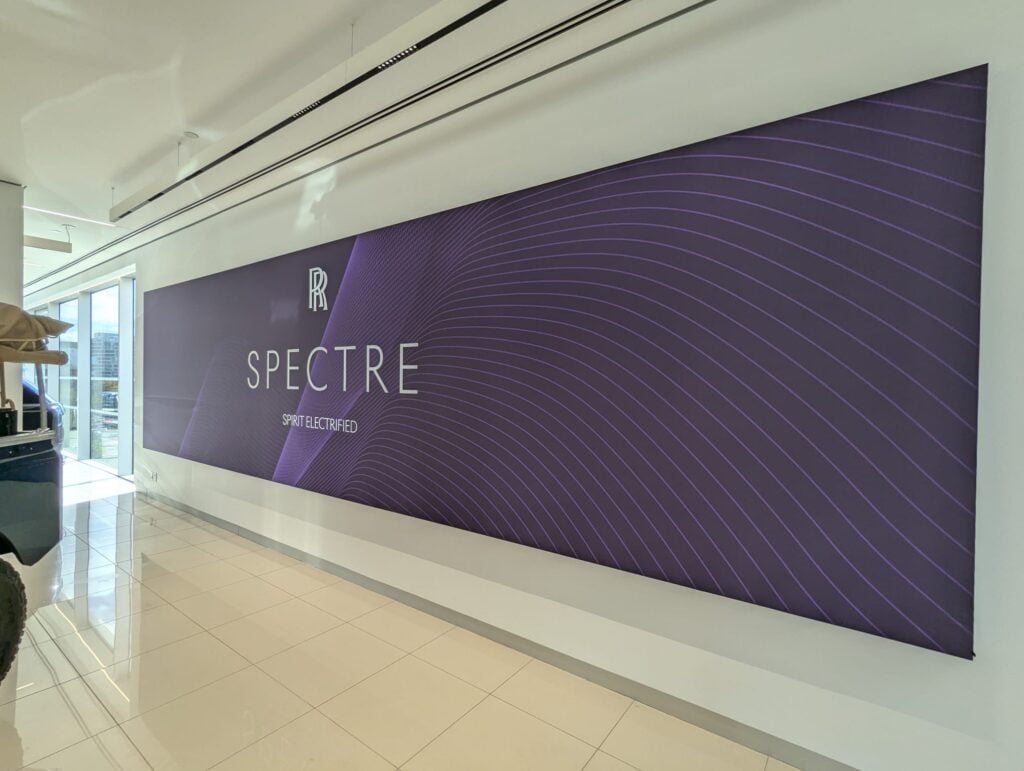
- Dye-sublimated fabric. The ink becomes part of the textile rather than a layer on top of it, so the colour is deep and the surface is matte with none of the plastic sheen of vinyl. Fabric folds flat for shipping and reinstalls, which suits trade shows, backdrops and interior displays. See the fabric printing page.
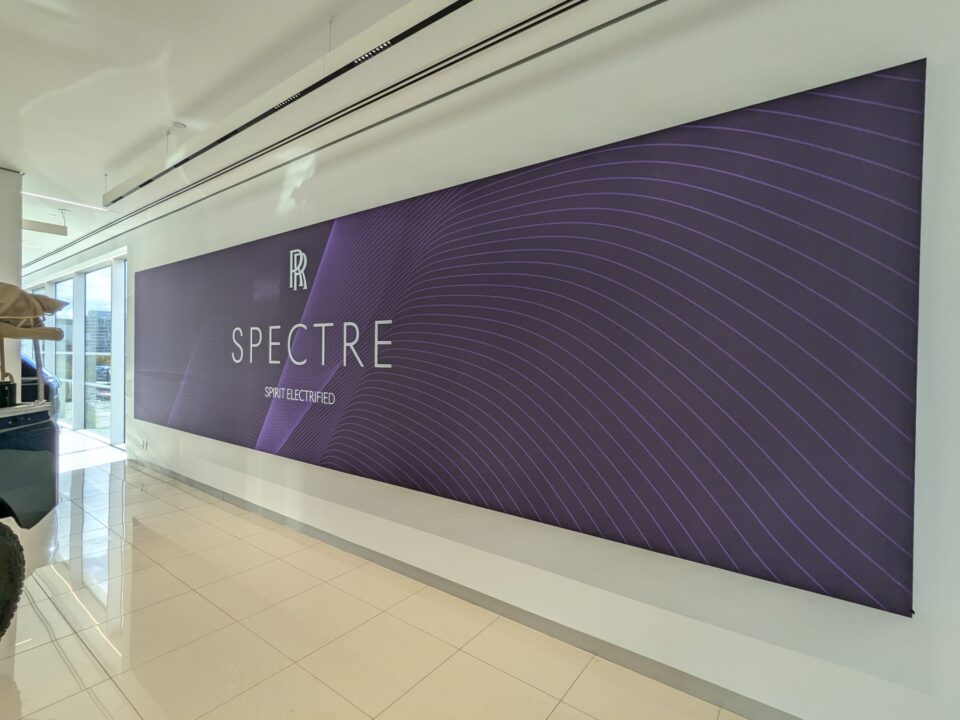
C17 Media stocks heavy-duty vinyl and wind-resistant mesh and prints with 3M-certified materials. For an indoor brand wall, the vinyl printing page compares the vinyl families. For an event backdrop, a tensioned fabric or step-and-repeat build usually beats a flat vinyl hang, and the step and repeat banners guide explains why.
Do you need a permit for a banner in Richmond Hill?
It depends on the sign type, and getting it wrong means a fine or a takedown order. The City of Richmond Hill allows banner signs in all zones except residential zones, and they must follow Section 6.4 of Sign By-law 52-09 (City of Richmond Hill, Sign Permit). A banner sign on your own commercial building generally does not need a separate permit, provided it meets that section.
Temporary signs are a different category. A portable sign permit costs $133 and is valid for 21 days. A mobile sign permit costs $133 if you can wait five business days for it to be issued, or $189 for two business days, and is also valid for 21 days. A charity sign permit costs $67 and is valid for 14 days. If your plan involves a roadside portable frame, a mobile sign trailer, or anything on public property, confirm the path with the City’s Community Standards Division before you print. Checking is cheaper than reprinting.
Richmond Hill sign by-law
What needs a permit, and what it costs
A banner on your own commercial building is the easy case. Portable, mobile and charity signs are the ones on a timer and a fee.
No permit
for a banner sign on your own building in a non-residential zone, under Section 6.4
21 days
how long a portable or mobile sign permit stays valid — 14 days for a charity sign
$67–$189
permit fee: $67 charity, $133 portable, $133–$189 mobile by issue speed
A pre-print checklist for Richmond Hill:
- Confirm the zone. Residential zones do not allow banner signs.
- Confirm whether yours is a building banner or a portable, mobile or charity sign.
- If it is temporary, budget the fee and work to the day limit.
- Keep a copy of the by-law section that applies, in case an inspector asks.
How should a commercial banner be finished and installed?
Finishing is where a banner lasts or fails, and it is the line buyers skip. A clean print with weak edges tears in the first strong wind. C17 Media prints seamlessly up to 16 feet (4.9 m) wide and finishes every banner with reinforced edges, grommets or hems, so the load spreads instead of concentrating on one point.
Match the finishing to the mount:
- Grommets are metal eyelets punched along the edge for rope, zip ties or bungee cords. Space them closer together on larger or windier installs.
- Hems fold the edge back on itself to stop fraying and give the grommets something strong to bite into. Ask for hemmed edges on any outdoor banner.
- Pole pockets are sleeves at the top and bottom for a rod, used for hanging banners and boulevard displays.
- Wind slits, or mesh instead, reduce billowing on exposed spans. On a solid outdoor banner, wind is the enemy: vent it or switch to mesh.
Indoors, the conversation shifts to clean mounting and reuse. Retractable stands, tension-fabric frames and hanging hardware keep an interior banner sharp without visible fasteners. If the job is really a display rather than a hung banner, the POP displays options fit better.
How much do commercial banners cost in Richmond Hill?
There is no single price, and a shop that quotes one before seeing your specs is guessing. The only fixed cost you can plan around is the City permit, where one applies: $67 for a charity sign, $133 for a portable sign, and $133 to $189 for a mobile sign. Everything else on the quote moves with four variables.
- Size. Square footage is the base driver. A 2 by 4 foot banner and a 4 by 16 foot building banner are different jobs, not different sizes of the same job.
- Material and lamination. Mesh, coated vinyl and dye-sublimated fabric each price differently, and a UV laminate adds cost in exchange for life.
- Finishing. Grommets, hems, pole pockets and hardware all add labour.
- Quantity. Ten of the same banner cost far less each than one, because setup is shared across the run.
The way to control the cost is to send real specs: the size, the mount, indoor or outdoor, and how long it has to last. Then let the shop pick the material that hits the budget and the lifespan. A banner that is cheaper but fails in one season is the expensive option.
Choosing a local Richmond Hill banner printer
Most of the businesses buying banners are small ones working to a real deadline. As of December 2024 there were 1.10 million employer businesses in Canada, and 1.08 million of them, or 98.2%, were small businesses; together they employed 5.8 million people, 46.6% of the private labour force (Innovation, Science and Economic Development Canada). Those are the storefronts, contractors and service firms on the other end of a banner order.
C17 Media is at 30 West Beaver Creek Rd, Unit #12 in Richmond Hill, and prints and finishes in-house rather than brokering the work out. Proofs and pickups do not wait on a courier from another city. The shop prints vinyl, mesh and fabric, finishes to order, and installs through 3M-certified installers.
When you are ready to spec a job, send the size, the mount and the timeline, and ask for a material recommendation to match. Start that on the contact page, or call 905.597.2178.
Frequently asked questions
What is the difference between vinyl and mesh banners?
Vinyl is a solid material that blocks wind and shows the most vivid colour, which makes it the default for most indoor and outdoor banners. Mesh is perforated so air passes through, which cuts the wind load on large exposed installs like fences and building wraps. Choose vinyl for image quality in sheltered spots and mesh for windy outdoor sites.
Do I need a permit to hang a banner in Richmond Hill?
A banner sign is allowed in all zones except residential zones and must follow Section 6.4 of Sign By-law 52-09. Portable, mobile and charity signs are separate categories that do need a permit: a portable sign permit costs $133 and is valid 21 days, a mobile sign permit costs $133 for issue in five business days or $189 for two and is valid 21 days, and a charity sign permit costs $67 and is valid 14 days. Confirm your own case with the City’s Community Standards Division before you print.
How long does an outdoor banner last in Ontario?
It depends on the material, the laminate and the exposure. A hemmed, grommeted vinyl banner with a UV laminate in a sheltered spot lasts far longer than an unlaminated banner in full sun and high wind. C17 Media’s own guidance is that standard banners tear in snow and wind and fade in the sun, which is why material and finishing decide lifespan. Ask for the rated durability of the material on your quote.
What sizes can you print?
C17 Media prints seamlessly up to 16 feet (4.9 m) wide, so a banner up to that width needs no seam. Larger installations are built from panels. Send your finished dimensions and the mounting method for an exact recommendation.
What file should I send for a banner?
Send high-resolution vector artwork where possible, with fonts outlined and images placed at full scale. If you only have a raster file, make sure it is large enough for the finished print size so the banner stays sharp at arm’s length and at fifty feet.