
Variable Data Printing: Mail People Actually Open
July 9, 2026
Why Does an Office Refresh Mean Weeks of Downtime?
July 10, 2026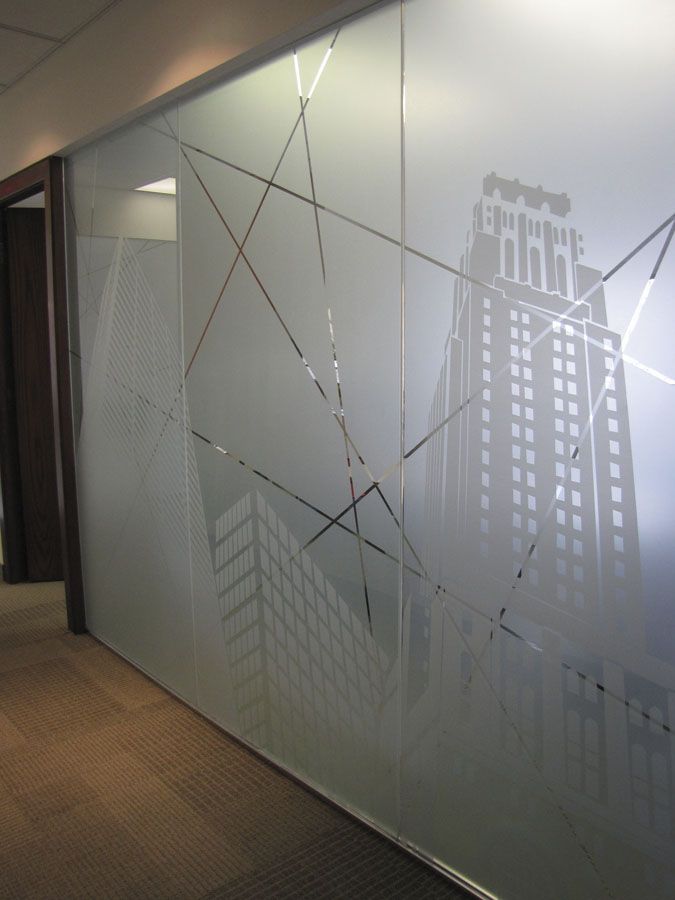
If you manage commercial real estate, design corporate offices, or oversee property anywhere in the Greater Toronto Area, glass is probably causing you two headaches at once. The first is legal: Ontario and Toronto rules require certain glass to carry visual markings, for people and for birds. The second is human: your beautiful open-concept boardroom makes everyone inside it feel like they’re presenting in a fishbowl.
Most property managers solve the first problem badly, slapping generic dots or cheap tape onto expensive architectural glass just to pass inspection, and never solve the second one at all. Here’s the part almost everyone misses: the rules tell you where markings must go and how big they must be. They do not say the markings have to be ugly. If it meets the spec, it can carry your logo, your pattern, or a frosted band that solves the privacy problem at the same time.
Key Takeaways
- The Toronto Green Standard requires bird-collision treatment on at least 85% of exterior glazing within the first 16 metres above grade for new mid- and high-rise and non-residential planning applications (City of Toronto). Visual markers at 50 mm x 50 mm spacing are the most common way to comply.
- Ontario’s Building Code requires all-glass doors on barrier-free paths of travel to carry a continuous contrasting strip at least 50 mm wide, placed 1,350 to 1,500 mm above the floor, and it may incorporate a logo (OBC 3.8.3.3).
- Mississauga’s own Green Development Standards became mandatory for new site plan applications after March 1, 2025, aligned with the CSA A460:19 bird-friendly standard (City of Mississauga).
- None of these rules mandate plain dots. Custom-cut logos, patterns, and frosted privacy bands can satisfy the same specs.
What the Rules Actually Require (and What They Don’t)
Two different bodies of rules apply to GTA glass, and they solve two different problems.
People walking into glass. Ontario’s Building Code requires that glass doors be designed so their existence and position are readily apparent (OBC, Transparent Doors and Panels). For all-glass doors on barrier-free paths of travel, the requirement is specific: a continuous opaque strip, colour-contrasted against the background, at least 50 mm wide, running across the door at a height between 1,350 and 1,500 mm above the finished floor (OBC 3.8.3.3). The Code explicitly allows that strip to incorporate a logo, as long as the logo doesn’t break the strip’s opacity, contrast, or continuity. Accessibility best practice under CSA B651 adds a second, lower band at roughly 900 mm so children and wheelchair users get the same warning (Construction Canada).
Birds flying into glass. Birds don’t perceive clear or reflective glass as a barrier. The fix is what designers call the screen-door effect: a visible pattern that reads as “solid object” to a bird’s brain, the same way mesh stops you from walking through a screen door. Toronto codified this in the Toronto Green Standard, and it’s a mandatory Tier 1 requirement for new mid- to high-rise residential and non-residential planning applications: at least 85% of exterior glazing within the first 16 metres above grade (or up to the mature tree canopy, whichever is greater) must be treated to deter bird collisions (City of Toronto). Visual markers are one of three accepted paths, alongside reflection-muting structures and non-reflective glass, and they’re by far the most practical for existing designs.
The 2 x 2 Rule: The Spec That Decides Your Pattern
You may have heard this called the “2 x 4 rule.” That’s the older guidance, and Toronto and the national standard have moved past it because wider spacing fails to protect smaller birds. The current spec is a 2 x 2 rule:
- Spacing: visual markers no more than 50 mm (2 inches) apart, vertically and horizontally, applied to the exterior (first) surface of the glass (Toronto Green Standard)
- Marker size: Toronto’s bird-friendly best practices call for dots at least 6 mm across (City of Toronto Best Practices); the national CSA A460:19 standard accepts markers as small as 4 mm in diameter, or 2 mm wide by 9 mm long for linear elements (Construction Canada)
Here’s the sentence that changes the whole conversation: nothing in those specs says “dot.” A 6 mm mark repeated on a 50 mm grid can be a dot, a diamond, a leaf, a maple key, or a miniature version of your logo. A continuous 50 mm strip across a glass door can be a plain band, or it can be a frosted gradient carrying your wordmark. Compliance sets the grid. You choose what lives on it.

Toronto vs. Mississauga: Know Your City’s Rules
Toronto. The Toronto Green Standard’s bird-collision deterrence is mandatory for new planning applications, with the 85%-within-16-metres treatment requirement described above. Toronto has published bird-friendly guidelines since the 2000s and treats this as a core sustainable design requirement, not a nice-to-have.
Mississauga. Mississauga stopped borrowing regional guidance and adopted its own Green Development Standards, mandatory for new residential and non-residential site plan applications submitted after March 1, 2025 (City of Mississauga). The bird-friendly measures align with the national CSA A460:19 standard and require treatment of exterior glazing in the same first-16-metres zone, with details in the city’s Tier 1 guidebook. If your property faces a park, ravine, or natural habitat, expect the bird-friendly conversation to come up early.
One caution from us rather than from any statute: requirements differ by municipality, building type, and application date, and they get updated. Treat this guide as orientation, and confirm the current requirements for your specific project with your municipality before specifying.
A note on glass itself. After a series of balcony-glass failures, Ontario’s Building Code was amended effective July 1, 2012, to require laminated heat-strengthened glass in balcony guards at or near the slab edge in new construction, with heat-soaked tempered glass permitted when the glass is inset (OBC, Glass in Guards). That rule governs the glass, not the graphics. Where film plays a safety role is a different 3M product family: 3M Safety and Security Window Films are designed to hold broken glass in place and help reduce flying shards (3M). They’re a meaningful upgrade for the right glass, though 3M itself is clear they don’t make damage or injury impossible, and impact-rated applications require 3M’s attachment systems.
The Fishbowl Problem, Solved by the Same Film
Now the second headache. Open-concept glass offices look spectacular and feel exposed. Executives host sensitive meetings in full view of the corridor. Confidential figures sit on screens that anyone walking past can read. Blinds fix the privacy and destroy the daylight and the aesthetic in one move.
This is where the compliance requirement and the privacy requirement turn out to be the same project. A frosted band across a glass door or partition can satisfy the OBC’s contrasting-strip requirement and block the sightline to laptops and meeting participants at exactly seated and standing eye level. A gradient frost can run opaque at eye level and fade to clear at the top, so daylight still floods the space. The films that do this well are 3M’s architectural glass finishes: 3M FASARA Glass Finishes and 3M CRYSTAL Glass Finishes, including the Dusted Crystal and Frosted Crystal patterns that deliver the look of sandblasted or etched glass at a fraction of the cost (3M).

Computer-cut from these materials, your mandatory markings become environmental graphic design: logos in the frost, mission statements running along a privacy band, geometric patterns that belong to your brand rather than to a compliance catalogue.
Why C17 Media for Custom Glass Graphics in the GTA
When a rule says “treat 85% of your lower glazing” or “band every glass door on the barrier-free path,” you are suddenly buying a lot of film, and cheap vinyl that peels, bubbles, or yellows turns a one-time project into an annual one.
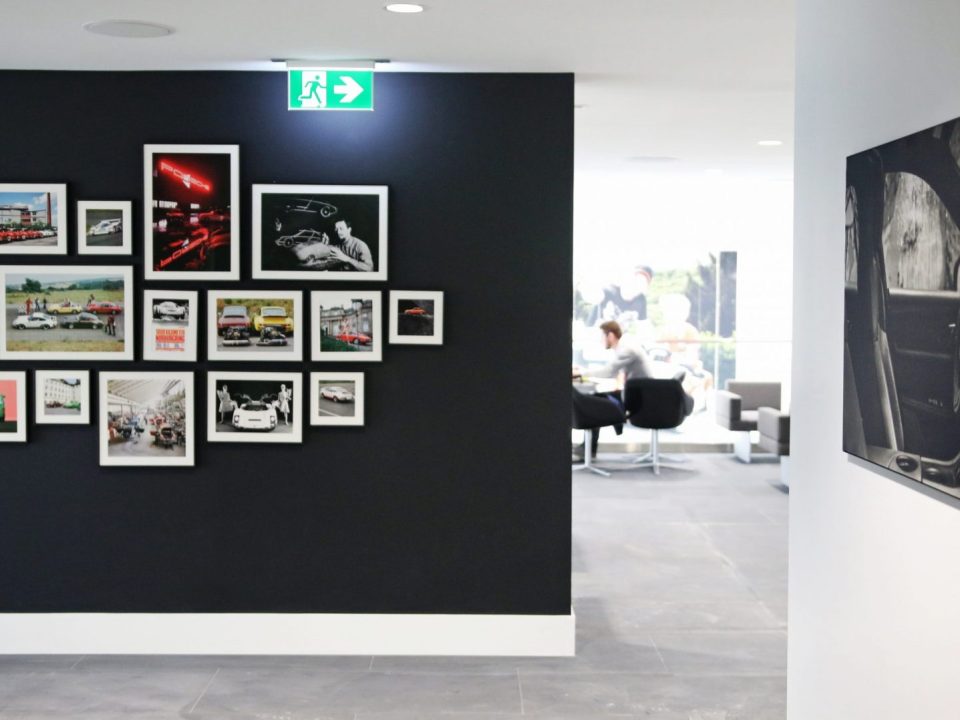
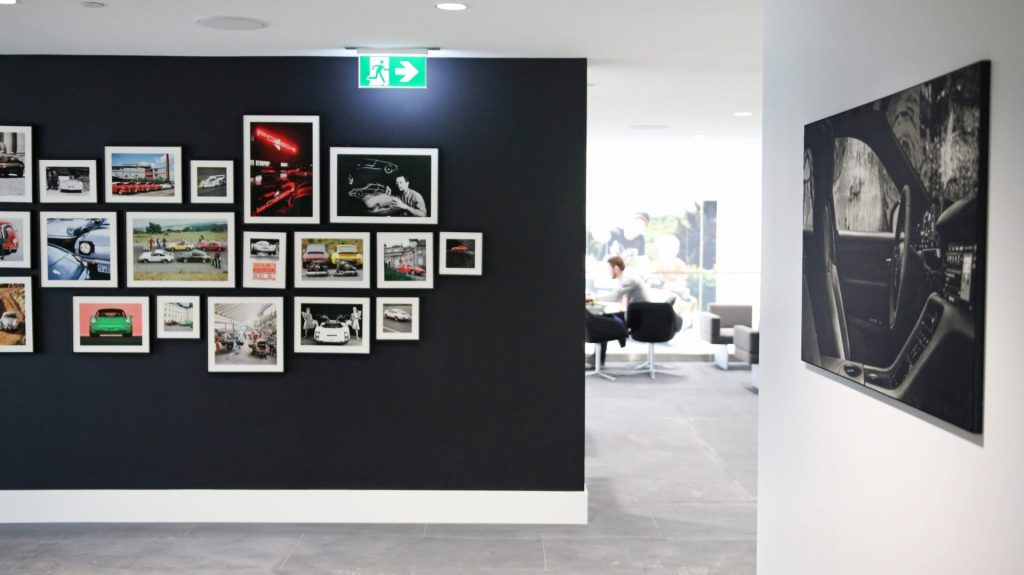
Certified 3M installation. C17 Media works with 3M architectural films and 3M-certified installers, so the materials are UV-resistant, bubble-free, and cleanly removable when your branding changes, without damaging the glass. We’ve handled code-driven glass work before: for Porsche Centre Markham, we produced and installed the interior window frosting the building required to meet Ontario Building Code and receive municipal occupancy approval, along with premium frost stripes with digitally cut branding on the entrance doors.
Design that earns the glass. Our designers turn the 2 x 2 grid and the 50 mm strip into assets: branded marker patterns, etched-glass effects, and gradient privacy frosts. If it fits the spec, we can print and cut it. See how this connects to the broader family of window graphics and perforated window film, or how we handle architectural film beyond glass.
Turnkey execution. Measurement, design, computer-cutting, and installation across multiple panels, aligned to survive an inspector’s eye and a designer’s. One accountable team from our Richmond Hill facility, serving Toronto, Mississauga, Markham, Vaughan, and the rest of the GTA.
Book a complimentary consultation before your next inspection or fit-out, and bring the drawings. We’ll tell you what the rules require for your glass and show you what they permit.
Frequently Asked Questions About Distraction Markers and Bird-Friendly Film
Do I have to use plain dots to comply with glass marking rules?
No. The specs govern size, spacing, contrast, and placement, not artwork. Toronto’s bird-friendly spec calls for markers at maximum 50 mm x 50 mm spacing, and the OBC’s barrier-free door strip must be continuous, opaque, and contrasting, but the Code explicitly permits a logo within the strip. Custom-cut logos, branded patterns, and frosted designs can all comply.
What is the 2 x 2 rule for bird-friendly glass?
Visual markers spaced no more than 50 mm (2 inches) apart, both vertically and horizontally, applied to the exterior surface of the glass. It replaced the older 2 x 4 guidance because wider horizontal spacing fails to deter smaller birds. Toronto’s best practices call for dots at least 6 mm across; the CSA A460:19 national standard accepts 4 mm dots or 2 mm x 9 mm linear marks.
What height do distraction markers need to be on glass doors in Ontario?
For all-glass doors on a barrier-free path of travel, the Ontario Building Code requires a continuous opaque, colour-contrasted strip at least 50 mm wide, positioned between 1,350 and 1,500 mm above the finished floor. CSA B651 accessibility guidance recommends a second strip at about 900 mm for children and wheelchair users. A frosted privacy band that covers those heights can satisfy the requirement while adding boardroom privacy.
How much of my building’s glass needs bird-friendly treatment in Toronto?
Under the Toronto Green Standard, new mid- to high-rise residential and non-residential planning applications must treat at least 85% of exterior glazing within the first 16 metres above grade, or up to the height of the mature tree canopy, whichever is greater. Visual markers, reflection-muting structures, or non-reflective glass all qualify. Confirm the current version’s requirements for your project with the City.
How do I fix the office fishbowl effect without losing natural light?
A gradient frosted film is the standard answer: opaque at seated and standing eye level to protect screens and meetings, fading to clear at the top so daylight keeps moving through the space. 3M FASARA and CRYSTAL glass finishes are designed for exactly this, and the same band can double as your OBC door-marking strip.
Does window film make glass safer if it breaks?
Decorative finishes are for appearance and privacy. The safety job belongs to 3M Safety and Security Window Films, which are designed to hold broken glass fragments in place and help reduce flying shards. They add real protection on the right glass, but no film makes damage or injury impossible, and impact-rated applications require 3M’s attachment systems. For balcony guards, Ontario’s Building Code has governed the glass itself since 2012.
Compliance You’d Actually Want Visitors to See
The GTA’s glass rules aren’t going away, and the fines, failed inspections, and dead birds that come from ignoring them cost far more than doing it right. But “doing it right” doesn’t mean surrendering your architecture to a sheet of generic dots. The specs define a grid; your brand can own it.
C17 Media designs, prints, and installs custom 3M window graphics from our Richmond Hill facility for buildings across Toronto, Mississauga, and the GTA. Book a complimentary consultation, call 905-597-2178, or email hello@c17media.com. Send us your floor plan and your logo, and we’ll send back glass that passes inspection and looks like you meant it.