
Distraction Markers and Bird-Friendly Film: A GTA Guide
July 9, 2026
Stadium & Arena Branding in Toronto: Transforming the GTA’s Premier Sports & Collegiate Venues
July 13, 2026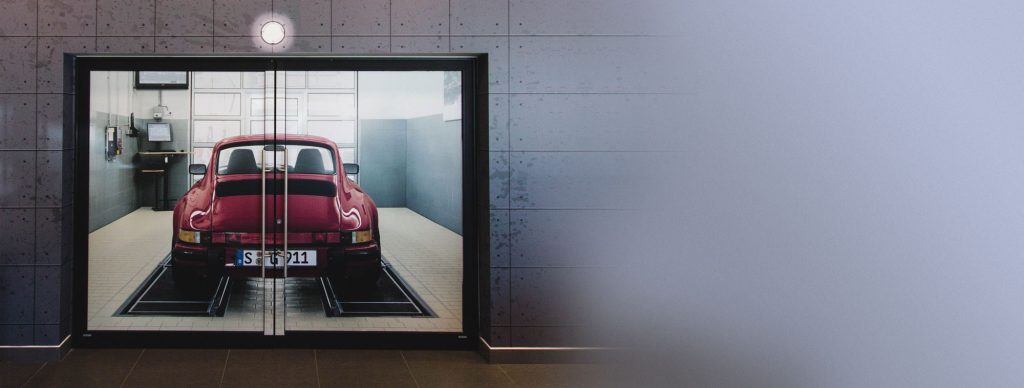
Picture the quote landing in your inbox. The finishes on your floor look tired, the walls are scuffed, and the boardroom laminate is peeling at the edge where every client sits. So you asked for renovation pricing. What came back was a number you expected and a schedule you didn’t: hoarding walls, demolition, dust control, trades booked in sequence, and your floor out of service for weeks. Now you get to choose which is worse. A dated office that embarrasses you in front of clients and talent, or a construction zone that displaces your entire team.
If the space is your responsibility, its impression becomes your reputation. This post is for the office managers, facility managers, and property managers across Toronto, Markham, Vaughan, and Mississauga who are stuck in exactly that trade-off, because an office refresh doesn’t have to mean construction. There’s a third option most renovation quotes never mention.
Key Takeaways
- Renovation downtime costs more than the invoice shows: closed space, displaced staff, tenant complaints, and the person who signed off wearing all of it.
- 3M DI-NOC architectural film resurfaces walls, doors, elevators, columns, and countertops in more than 800 realistic patterns (Designtex).
- Resurfacing needs no contractor, no demolition, and no construction, and installs can run overnight (our architectural services page).
- Film is not a fix for structural problems. Honest scoping decides which route you actually need.
What Does an Office Refresh Cost in Downtime?
More than the line items suggest. A renovation quote prices materials, labour, and disposal. It doesn’t price what happens to your operation while the hoarding is up, and that’s where the real damage accumulates.
Start with the closed space itself. Every day a floor sits behind plastic sheeting is a day it produces nothing. Meeting rooms vanish from the booking system. Desks disappear. The square footage you pay for every month becomes square footage nobody can use.
Then come the people. Displaced staff get squeezed into borrowed corners or sent home, and productivity follows the seating chart down. In a multi-tenant building, it’s worse: drilling and demolition dust travel through shared corridors, and the complaints land on the property manager’s desk within hours. Tenants just remember who was in charge when their quiet floor stopped being quiet.
And underneath all of it sits the quiet career math. If the refresh runs long, blows the budget, or triggers a tenant revolt, nobody blames the drywall crew. They blame the person who approved the plan. That’s the fear that keeps dated offices dated: not the cost of fixing them, but the cost of the fix going sideways.
There’s a way out of that trap for cosmetic work. If you’d rather see it in person than read about it, book a complimentary consultation and site walkthrough and we’ll assess your space with you.
Why Replace When You Can Resurface?
That question is our tagline, and it’s the entire idea in four words. Most “dated” offices aren’t structurally tired. The walls stand fine. The doors work. The columns hold the building up. What’s aged is the surface: the finish people see and judge. So instead of demolishing sound surfaces to install new ones, you resurface what’s already there.
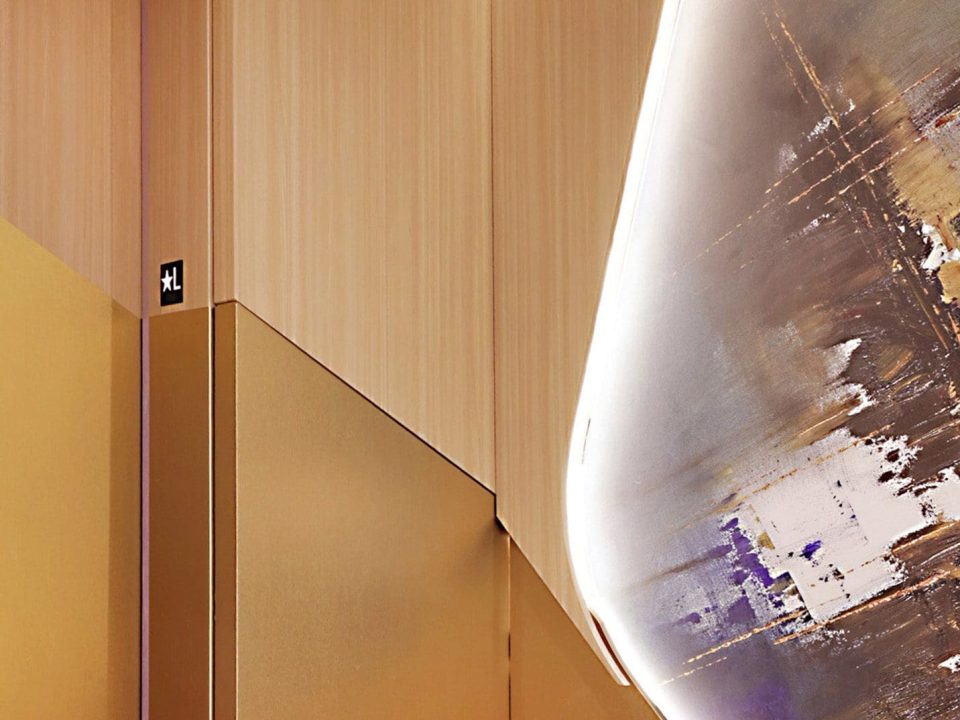
The material that makes this possible is 3M DI-NOC architectural film: an 8-mil, multi-layer, adhesive-backed vinyl finish that replicates wood grain, natural stone, metal, and hundreds of other designs (Designtex). There are more than 800 realistic patterns in the range, including over 300 wood designs, so matching a design intent is rarely the constraint.
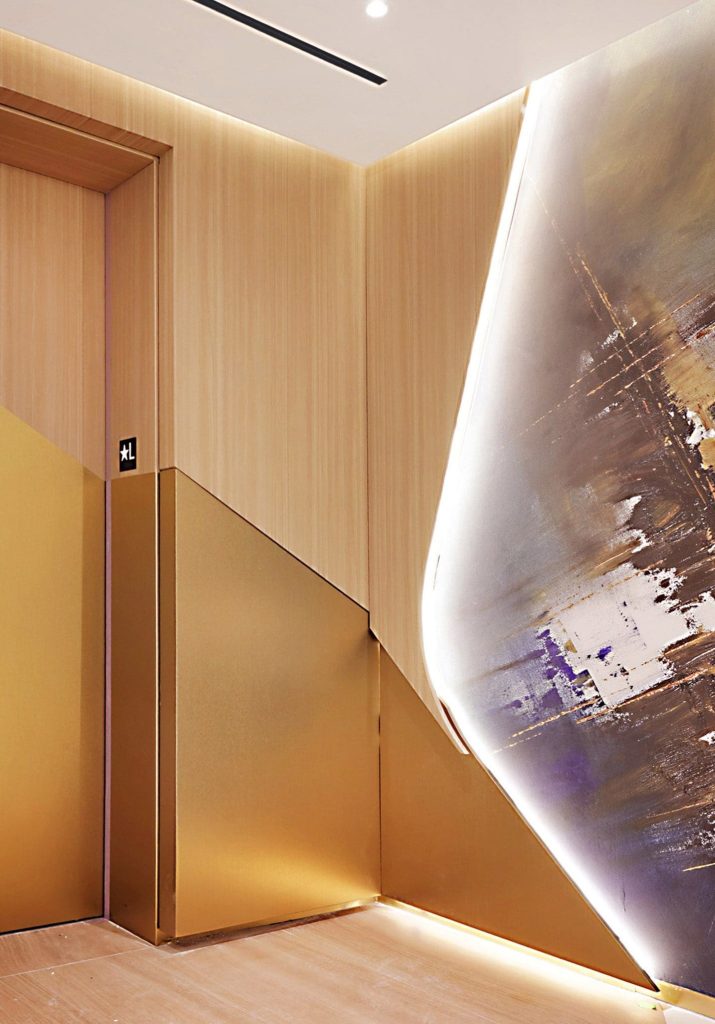
It goes nearly everywhere your visitors look. Designtex lists case goods, ceilings, countertops, doors, elevators, drywall, signage, panels, and columns, and the film bonds to most non-porous smooth surfaces such as metal, wood, interior glass, and high-pressure laminates (Designtex). That peeling boardroom laminate becomes walnut. The scuffed elevator becomes brushed metal. The beige column becomes stone.
The commercial logic is simple. With film, you only consider two costs: material and installation. No general contractor. No demolition. No construction schedule (our architectural services page). And because the existing surface stays in place instead of going to landfill, resurfacing extends its service life rather than ending it. For a full breakdown of how the material works, our 3M DI-NOC architectural film guide goes through it piece by piece.
How Does an Overnight Install Work Around Business Hours?
Your office closes at 5:30. Ours doesn’t have to. Because film installation involves no demolition, no debris, and no trades waiting on each other, the work slots into the hours your space isn’t earning: evenings, overnights, weekends. Staff leave a tired lobby on Friday. They walk into a finished one on Monday. Spaces can be revamped in a fraction of a traditional renovation timeline, and overnight installs are a routine option, not a special favour (our architectural services page).
Think about what that removes from your risk list. There are no hoarding walls in the corridor, no dust migrating into tenant suites, and no relocation plan for your team. The refresh happens in the gaps of your operating calendar, and the business simply keeps operating.
Elevators deserve a special mention here, because they’re the space property managers can least afford to lose. Film applies directly to elevator cabs and panels, which means the refresh that used to require taking a cab out of rotation doesn’t have to. We’ve written a full companion piece on why tenants judge buildings by their elevators.
Where Film Works, and Where It Honestly Doesn’t
Let’s be straight about the limits, because a partner who oversells film is just a contractor problem in a different uniform. Architectural film is a surface solution. If your walls are water-damaged, your layout no longer fits your headcount, or the mechanical systems behind the drywall need work, that’s genuinely a construction project, and film won’t change that. A finish can’t fix bad space planning either. It makes surfaces beautiful; it doesn’t move them.
Surface selection matters too. DI-NOC bonds to most non-porous smooth surfaces, such as metal, wood, interior glass, and high-pressure laminates (Designtex). Not every substrate qualifies, which is exactly why the process starts with a site walkthrough rather than a quote form. And on fire performance, we’ll say only what should be said: specifiers should consult 3M’s technical data directly for their specific application.
What does a properly scoped film project deliver? Designtex rates DI-NOC at an expected performance life of 12 years for indoor vertical applications (Designtex). That’s a refresh measured in years, not seasons. If durability is the question keeping you skeptical, our companion post on how long architectural films actually last takes it head on.
Why Choose C17 Media for the Overnight?
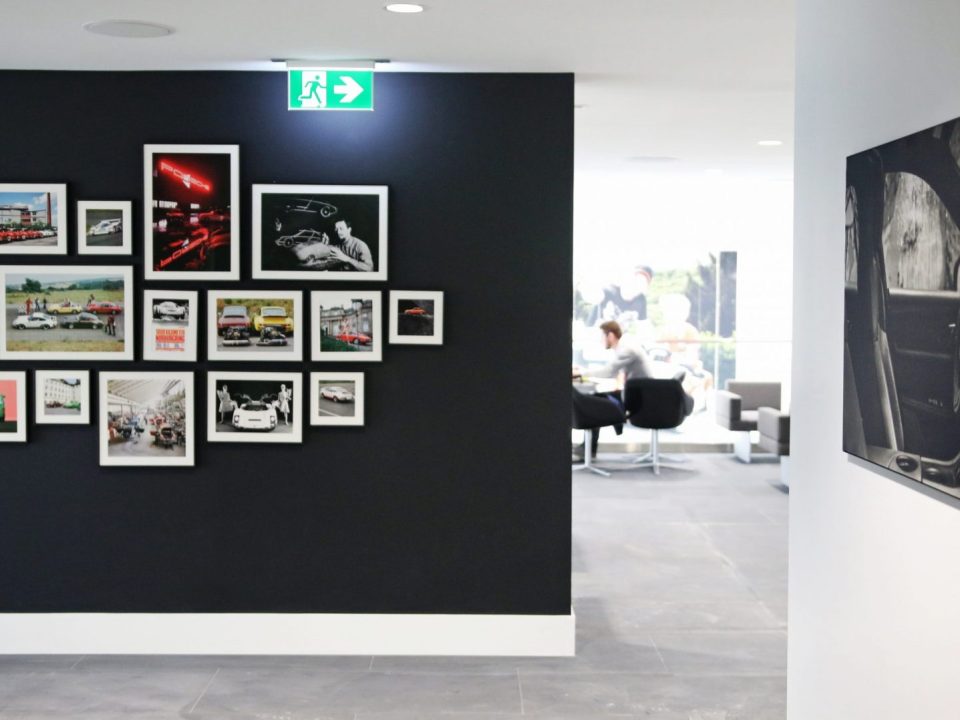
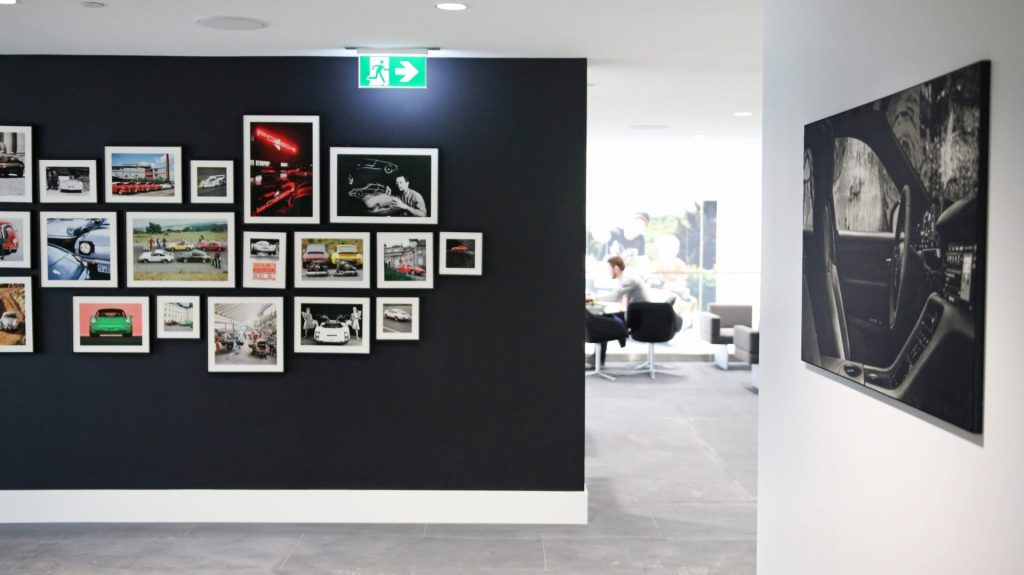
Materials don’t install themselves, and an overnight schedule only works when the crew has done it before. C17 Media is Toronto’s premier installer of 3M DI-NOC architectural finishes, operating from a 15,000 square foot production facility in Richmond Hill. Sixteen years in business. More than 40 recognized brands served, including Shopify and Hudson’s Bay. A 4.8-star Google review average. When Porsche Centre Markham needed a showroom finished to a luxury standard, we produced and installed it.
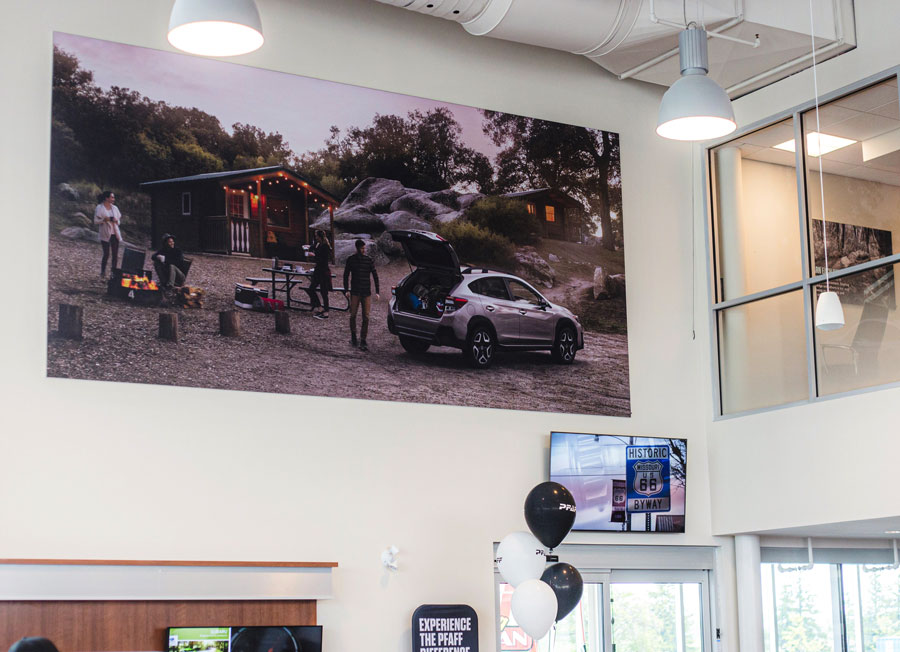
Why does that pedigree matter for your office? Because film rewards precision. Edges, seams, corners, and surface prep are the difference between a finish that reads as real walnut and one that reads as a sticker. Dealerships and premium retailers hire for that difference, and the same installers work on office floors, lobbies, and elevator cabs across the GTA. You can browse the results yourself in our portfolio or read where the company came from on our about page.
Frequently Asked Questions
What is 3M DI-NOC architectural film?
It’s an 8-mil, multi-layer, adhesive-backed vinyl film used as a decorative surface finish, replicating wood grain, natural stone, metal, and hundreds of other designs (Designtex). The range includes more than 800 realistic patterns, with over 300 wood designs alone. It resurfaces existing architecture instead of replacing it.
Which surfaces in an office can be resurfaced?
Designtex lists case goods, ceilings, countertops, doors, elevators, drywall, signage, panels, and columns (Designtex). The film bonds to most non-porous smooth surfaces, including metal, wood, interior glass, and high-pressure laminates. A site walkthrough confirms which of your surfaces qualify before anything is quoted.
Does the office really stay open during installation?
Yes, that’s the point of the approach. There’s no demolition, no contractor, and no construction, so installation slots into evenings, overnights, and weekends. Your team leaves at close and returns to a transformed space, with no hoarding or displaced desks in between.
How long does a DI-NOC finish last?
Designtex rates DI-NOC at an expected performance life of 12 years for indoor vertical applications (Designtex). Proper surface prep and professional installation protect that lifespan. We cover the durability question in detail, including what shortens film life, in our post on architectural film longevity.
Is architectural film fire rated?
Fire performance depends on the specific product and application, so we don’t make blanket claims. Specifiers should consult 3M’s technical data for fire performance information relevant to their project.
When is film the wrong choice?
When the problem is more than cosmetic. Water damage, failing substrates, layout changes, and mechanical work all need real construction, and a finish can’t fix bad space planning. An honest assessment sorts this quickly, which is why we walk the site before recommending anything.
Can elevators and doors be refreshed without taking them out of service?
Film applies directly to elevator cabs, panels, and doors (Designtex), and installs work around your building’s schedule. For property managers, that’s often the highest-impact surface in the building. Our piece on elevator cab refreshes in Toronto covers it fully.
How do I find out if my space is a candidate?
Start with a complimentary consultation and site walkthrough. We assess your surfaces, bring sample swatches so you can see and touch the actual finishes, and tell you plainly if any part of your project needs construction instead. No commitment until you’ve held the material in your hand.
The Refresh That Nobody Has to Survive
The renovation quote gave you two bad options: stay dated or shut down. Resurfacing removes the choice. Sound surfaces stay where they are, film transforms what people see, the work happens while your office sleeps, and the operation never stops. Weeks of hoarding become an overnight. And the existing walls, doors, and panels stay out of landfill while they’re at it.
C17 Media has been transforming GTA spaces since 2010, and as Toronto’s premier 3M DI-NOC installer we’ve made overnight refreshes a working routine rather than a promise. See what your space could become before you commit to anything: book a complimentary consultation and walkthrough through our contact page, call 905-597-2178, or email hello@c17media.com, Monday to Friday, 9:00 to 5:30. Bring us the renovation quote that scared you. We’ll show you the version without the downtime.