
Wide Format Printing: The Complete Guide for Businesses
June 29, 2026
Why Print Files Fail (and Who Pays When They Do)
July 9, 2026
Here’s a scenario every marketing manager in Toronto knows. The trade show is Friday. The booth graphics arrive Thursday afternoon, and the brand green is the wrong green. The printer’s support line goes to a ticket queue. Your director is asking if everything’s ready. You did everything right except one thing: you chose a vendor when you needed a partner.
If print is your responsibility, then a printer’s failure becomes your failure. Those are the real stakes of this decision, and it’s why “who’s cheapest” is the wrong first question. This guide walks through how buyers who can’t afford a bad Friday evaluate commercial printing in Toronto and the GTA: the difference between a print partner and an upload-and-pray portal, why in-house production protects you personally, the seven questions that expose a weak shop in minutes, and the red flags that should end a conversation early.
Key Takeaways
- In a FedEx Office survey, 68% of consumers said signage quality reflects business quality (FedEx Office/Ketchum, 2012). Your print is your reputation, printed.
- The wrong printer costs you three times: the job, the reprint, and the impression it left while it hung there wrong.
- In-house production means one accountable team controls quality and timelines. Brokered work adds a middleman between you and your deadline.
- Print remains an $834.3 billion global market in 2026 (Smithers). Choose a partner, not just a price.
What Does Choosing the Wrong Print Shop Actually Cost?
More than the invoice. In a FedEx Office survey, 68% of consumers said they believe a business’s signage reflects the quality of its products or services, and 52% said they were less willing to enter a store with poorly made signs (FedEx Office/Ketchum, 2012). That’s a US study, but the instinct crosses the border just fine. Every banner with muddy colour and every brochure with a visible seam is quietly telling your Toronto customers something you didn’t approve.
Now add the internal cost. When print fails, somebody inside your company wears it, and it’s rarely the printer. It’s the marketing manager who picked them. The franchise ops lead who signed off. The dealership GM who promised the opening date. A bad print vendor doesn’t just waste budget; it spends your credibility.
Print is worth getting right because it still works. Smithers forecast the global print market at $834.3 billion in 2026, with digital printing’s share of that value growing from 17.2% in 2021 to 21.6% (Smithers, 2021). Businesses keep buying print because customers keep responding to it. The only question is whether yours will be the print they respond to.
If you’d rather skip the trial and error entirely, book a complimentary project consultation and pressure-test us with everything in this guide. We wrote it knowing we’d be judged by it.
Commercial Print Partner vs. Online Gang-Run Printer: What’s the Difference?
An online gang-run printer batches your job onto a press sheet with dozens of other customers’ orders, prints them all at once, and ships yours out. A commercial print partner runs your job on its own terms: your stock, your colour targets, your deadline. The gang-run model is built for cost. The partner model is built for people whose name is attached to the outcome.
Gang-run has a legitimate place. If you need 500 generic postcards and nobody will inspect them closely, an online portal is cheap and adequate. The trade-offs show up the moment the job matters:
- Colour control. Gang-run jobs share ink settings across every order on the sheet. Your brand green comes out however the batch comes out.
- Stock and format limits. You pick from a menu. Custom sizes, specialty substrates, and oversized pieces usually aren’t on it.
- No human review. If your file has a bleed error or a low-resolution logo, many portals print it anyway. You find out when the box arrives.
- No recourse. Reprints mean support tickets, not a five-minute phone call with someone who knows your account.
Side by side, the difference looks like this:
| Online gang-run printer | Commercial print partner | |
|---|---|---|
| Colour control | Shared ink settings across the batch | Proofed to your brand targets |
| Stock & formats | Fixed menu of standard options | Custom sizes and specialty substrates |
| File review | Often prints whatever you upload | A person preflights before production |
| When something goes wrong | Support ticket queue | Phone call with someone who knows your job |
| Best for | Cheap, generic, forgiving pieces | Brand-critical, custom, deadline-driven work |
A commercial shop earns its margin on exactly those points. At C17 Media, every project runs through our full range of print services with a person checking files, proofing colour, and confirming specs before anything hits a press. You’re not buying prints. You’re buying the absence of a Thursday afternoon crisis.
Why In-House Production Protects You Personally
Here’s a quiet truth about the print industry: plenty of “printers” don’t print. They take your order, mark it up, and send it to a trade shop you’ll never see. Brokering isn’t fraud, and some brokers manage it well. But every layer between you and the press is a place for your deadline to quietly die, and you’re the one who promised that deadline to someone.
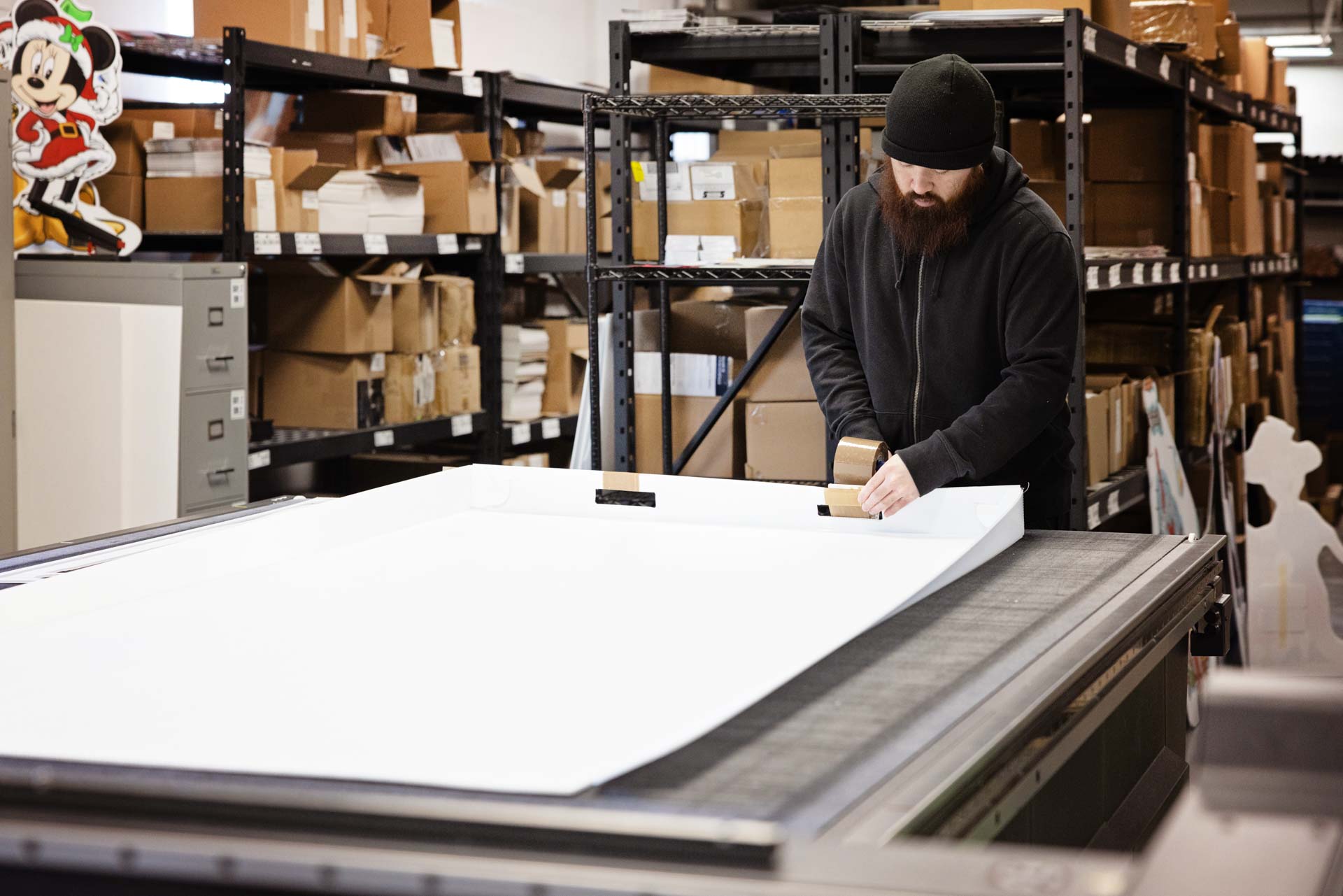
Why does in-house production matter so much? Two words: control and speed.
Quality control. When the press, the finishing table, and the person who took your call sit in the same building, problems get caught early. An operator who spots banding on a large format panel can stop, adjust, and rerun it within the hour. A broker finds out when the trade shop ships it, which is to say, too late for you.
Timelines. Brokered jobs travel: files go out, proofs come back, freight moves between facilities. Each handoff is a place for a day to disappear. In-house work moves down a hallway instead. When a Toronto client calls with a compressed deadline, a shop that owns its equipment can rearrange its own schedule. A broker can only ask nicely.
C17 Media runs digital and offset presses alongside large format printing in one 15,000 square foot facility in Richmond Hill. That’s a deliberate choice. It means we recommend the right process for each job honestly, because we produce both and profit from neither answer more than the other. If you’re weighing those processes yourself, our digital vs. offset printing explainer breaks down when each one wins.
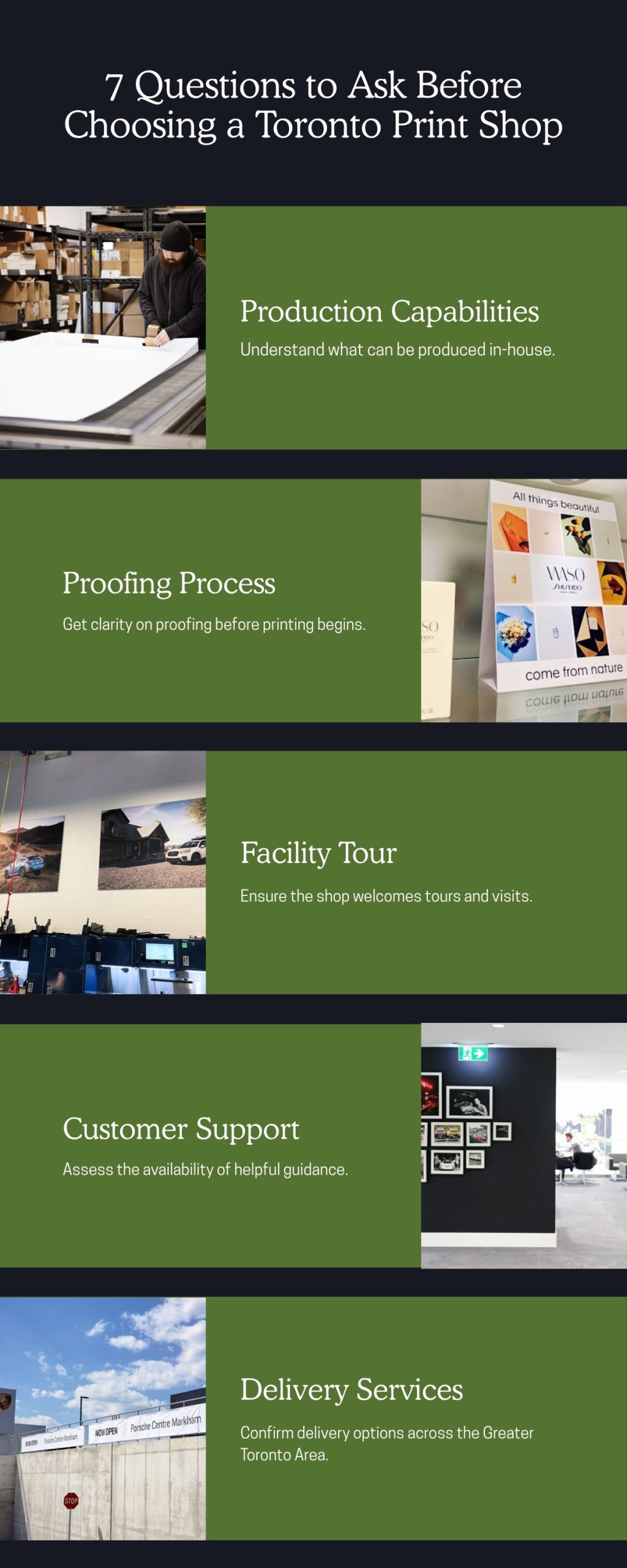
What Questions Should You Ask Before You Commit?
Interview a print shop like a hire, because that’s what it is: someone you’re trusting with your reputation. Good shops answer these questions easily and specifically. Evasive answers are data too.
A few notes on what these questions surface:
Capabilities. “What do you produce in-house, and what do you outsource?” forces honesty about brokering. A shop that does everything from business cards to building-sized graphics should be able to walk you through the equipment. Our wide format printing guide explains the large-end categories if you want to speak the language.
Proofing. Ask how proofs are delivered, whether hard proofs are available for colour-critical work, and what happens if the proof doesn’t match your expectations. The answer tells you exactly how disputes will go later.
File support. Will a real person preflight your files? A shop that helps fix your artwork saves you from paying to print a mistake, and saves you from explaining that mistake upstairs.
Turnaround. Don’t accept a generic promise. Ask what’s realistic for your specific job, and what happens when a deadline is genuinely tight.
Proof of work. Any established shop should show you real projects, not renders. Browse our portfolio and judge for yourself.
What Does That Standard Look Like in Practice?
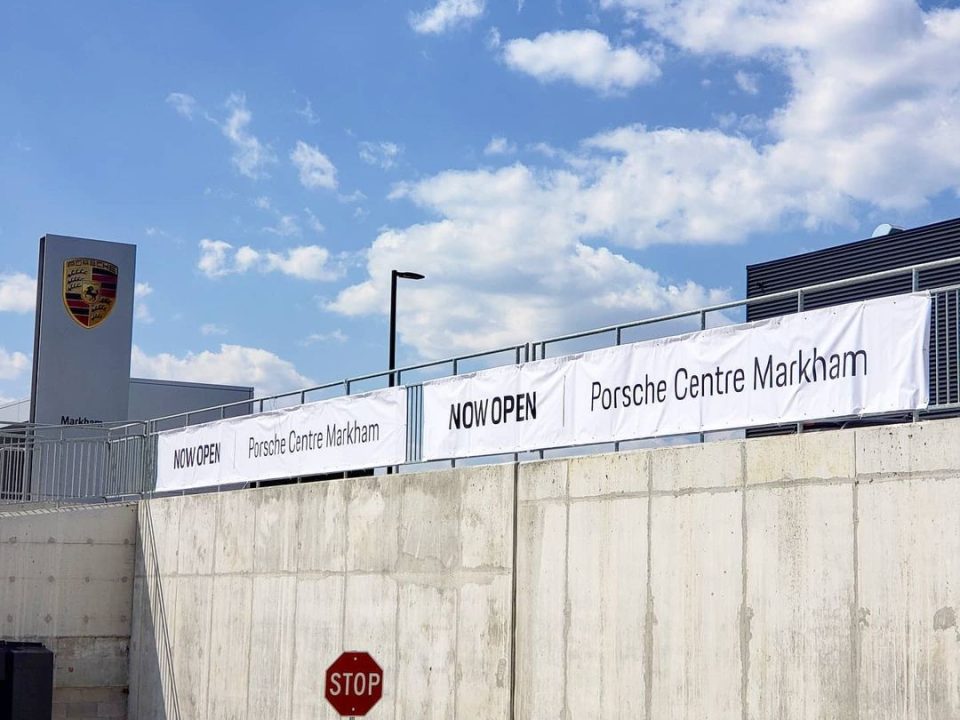
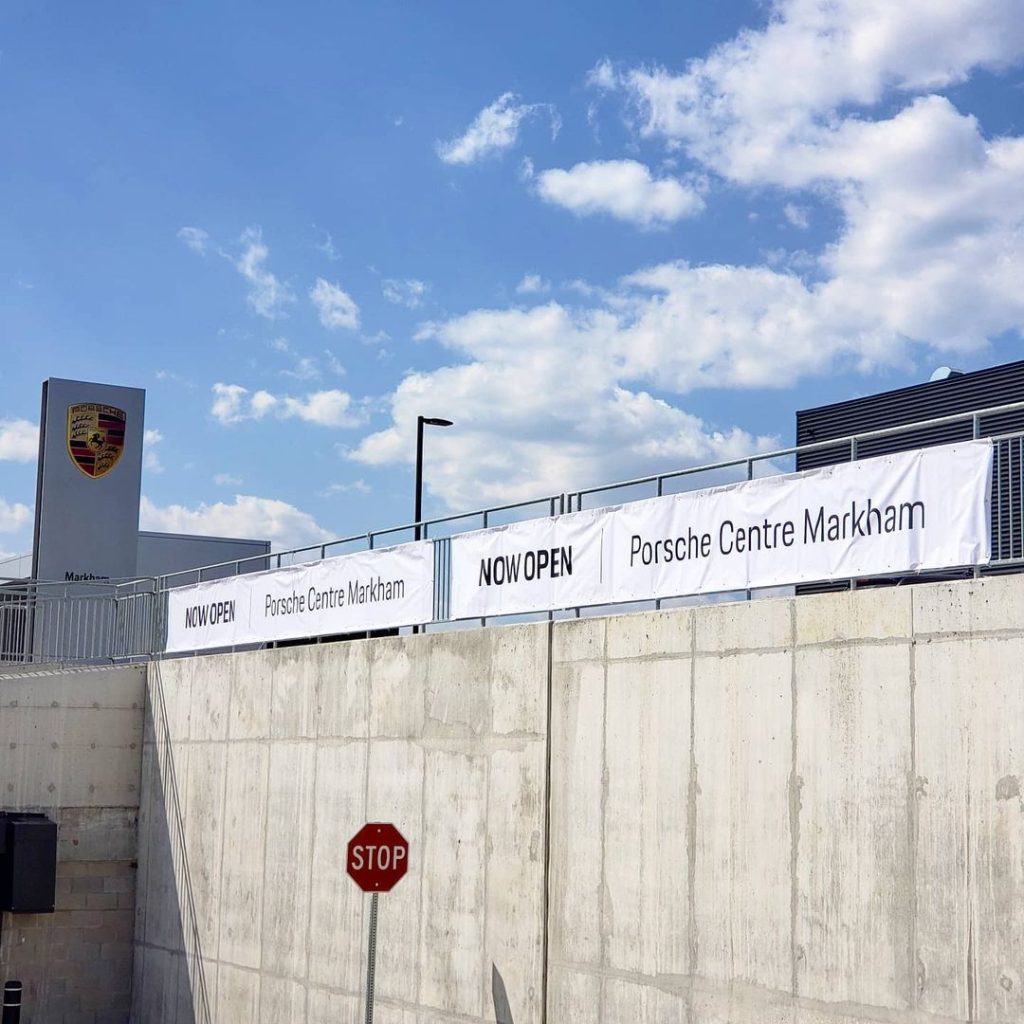
Talk is cheap in every industry, so here’s a checkable example. When Porsche Centre Markham was being built, C17 Media was brought in while the dealership was still architectural drawings. We produced and installed the showroom fabric displays, including a seamless print 360 inches wide, the drive-thru graphics, the interior window frosting required to meet Ontario Building Code, and the wayfinding and safety signage the building needed to receive municipal occupancy approval. Then we delivered the opening-day stationery, from business cards to service forms, so every department could work from day one. One partner, one accountable team, one deadline met. You can read the full project on our portfolio.
That’s the pattern our clients hire us for. Country Style trusts us with campaign print across its national franchise network. Shiseido Canada trusts us with premium packaging. In sixteen years we’ve produced for more than 40 recognized brands, including Shopify and Hudson’s Bay, and the Google reviews our customers leave average 4.8 stars. None of that guarantees your job goes perfectly. It does mean that when something unexpected happens at 4 p.m. on a Thursday, you’re calling people who have solved it before.
GTA Logistics: Delivery, Installs, and One Accountable Contact
Geography matters more in printing than people expect. Large format graphics are bulky, fragile in transit, and often useless until they’re professionally installed. A wall mural shipped from another province is a rolled tube and a problem. A wall mural from a local shop is a finished wall.
Working with a Toronto-area printer gives you three practical advantages:
- Delivery without drama. Local jobs move by local vehicle, not third-party freight. Nobody’s tracking a shipment across the country the morning of your event.
- Site installation. Window graphics, wall murals, dimensional signage, and retail displays need installers who show up, measure, and mount. A shop with its own GTA install capability owns the result end to end.
- One point of contact. When your printer, project manager, and installer answer to the same company, “who’s responsible?” has exactly one answer. That accountability is worth real money when timelines compress, and worth even more to the person who has to report upstairs.
C17 Media works from 30 West Beaver Creek Rd, Unit 12, in Richmond Hill, minutes off Highway 407, and serves businesses across the Greater Toronto Area and Canada-wide. Downtown retail storefront, Markham office lobby, Mississauga trade show floor: same team, same trucks, same phone number. You can read more about how we got here on our about page.
Red Flags That Should End the Conversation
Some warning signs are worth taking seriously no matter how attractive the quote looks. In our experience, the shops that cause the most pain share a recognizable profile.
- No physical address, or a reluctance to let you visit. A production facility is a print shop’s best sales tool. Hiding it usually means there isn’t one.
- Vague answers about equipment. “We can do anything” without naming a single press or process suggests everything gets brokered.
- No proofing step, or proofs treated as a nuisance. If a shop wants to skip straight to production, it’s planning to make your mistakes at full speed.
- Quotes that seem impossibly low. Somebody pays for that gap: usually in stock quality, colour accuracy, or your reprint budget. The cheapest quote is often the most expensive decision on the table.
- No portfolio or verifiable clients. Sixteen years of work leaves a trail. So does six months.
- Silence after the sale. If a shop is slow to respond while it’s courting your business, imagine the service after your deposit clears.
None of these alone is fatal. Two or three together? Keep looking. The hour you spend vetting now is the crisis you don’t manage later.
Frequently Asked Questions About Toronto Print Shops
What is gang-run printing?
Gang-run printing combines many customers’ jobs onto one shared press sheet to cut costs. It’s economical for simple, standard-size pieces, but you give up colour control, stock options, and individual quality checks. Colour-critical branding, custom formats, and deadline-sensitive work belong with a commercial shop that runs your job on its own.
What files should I send to a commercial printer?
Print-ready PDFs with proper bleeds are the standard ask, and vector files work best for logos. That said, a good commercial print shop reviews your files before production and flags problems like low resolution or missing fonts. Ask any shop you’re considering how their preflight and proofing process works before you send artwork.
Does a print shop handle installation too?
Not all of them, so ask early. Installation matters most for large format work: wall murals, window graphics, retail displays, and signage. C17 Media handles installation for GTA projects, which keeps production and mounting under one accountable roof instead of splitting the job between a printer and a separate installer.
Is print still worth investing in?
Yes. Smithers forecast the global print market at $834.3 billion in 2026, with digital printing growing its share of that value from 17.2% to 21.6% between 2021 and 2026 (Smithers, 2021). Print endures because physical media builds trust and presence in ways screens don’t replicate.
Should I choose digital or offset printing for my project?
It depends on quantity, format, and colour requirements, which is exactly why you want a shop that offers both and recommends honestly. C17 Media runs digital and offset production in-house. Our digital vs. offset comparison explains how each process works and where each one wins.
Why choose a Richmond Hill print shop for Toronto work?
Richmond Hill sits at the centre of the GTA with fast highway access in every direction, so delivery and site installs across Toronto, Markham, Vaughan, and Mississauga stay simple. You get big-city production capability with one local point of contact, without downtown congestion slowing down pickups, deliveries, or installation crews.
The Decision, Made Simple
Choosing a print shop in Toronto comes down to one question underneath all the others: when something goes wrong at the worst possible moment, who picks up the phone, and can they fix it? Answer that, and the decision usually makes itself.
C17 Media has produced commercial printing for GTA businesses since 2010: digital, offset, and large format under one 15,000 square foot roof, a portfolio spanning more than 40 recognized brands, and installs that have taken dealerships from drawings to occupancy. Ask us the seven questions above. We like answering them, and we’re one of the few shops that will invite you to tour the floor while we do.
Book a complimentary project consultation through our contact page, call 905-597-2178, or email hello@c17media.com. Monday to Friday, 9:00 to 5:30, a real person picks up. Bring us the job with the deadline that scares you.