
Step and Repeat Banners: The Complete 2026 Guide
June 22, 2026
How to Choose a Print Shop in Toronto: A Buyer’s Guide
July 9, 2026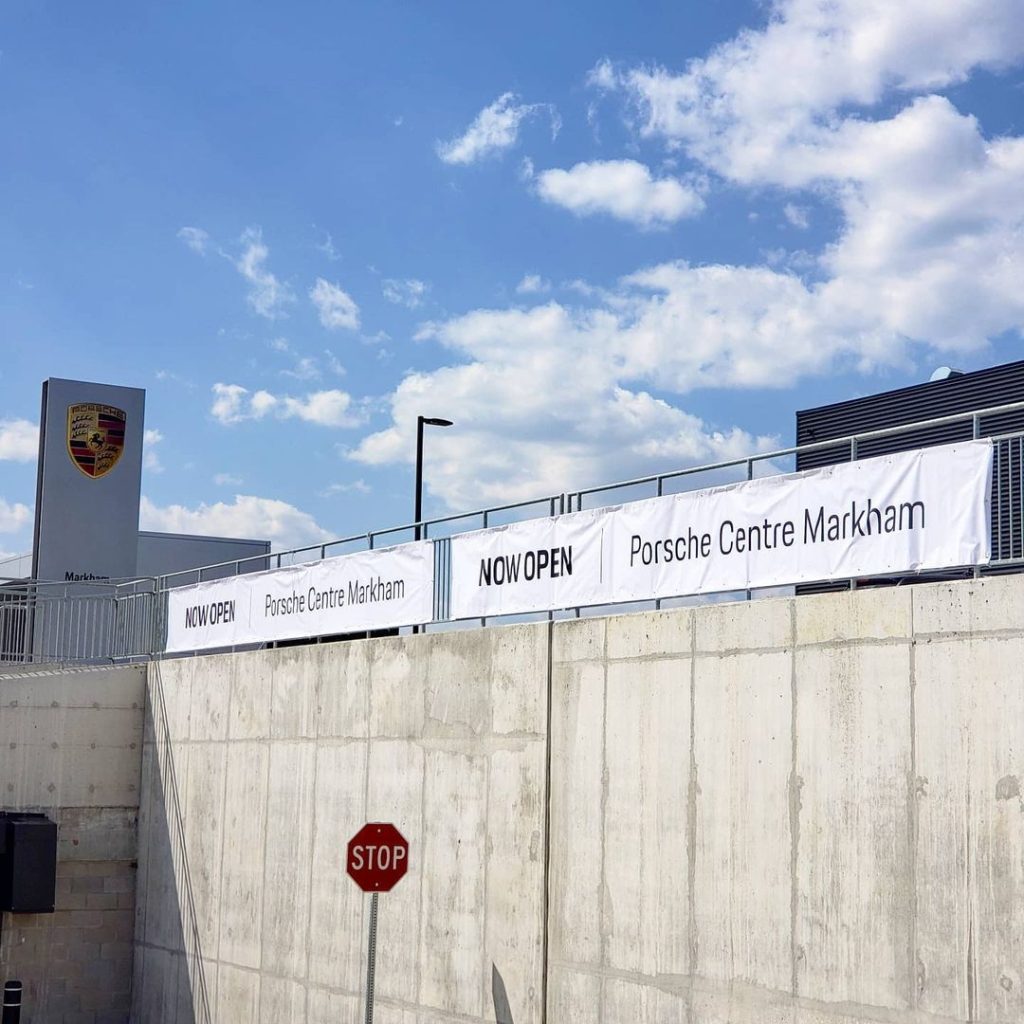
Walk through any GTA retail district, trade show floor, or condo construction site and you’re surrounded by wide format printing. The banners, wall murals, window graphics, and hoarding panels that shape how a city looks all come off the same family of machines. It’s a serious industry, too: Smithers forecast the global print market would reach $834.3 billion in 2026 (Smithers, 2021), and wide format is one of its most visible corners.
This pillar guide explains what wide format printing actually is, how it differs from large and grand format, which technologies do the work, and where each application fits. We’ve printed for brands like Audi, Shopify, and Hudson’s Bay since 2010, so we’ll keep it practical.
Key Takeaways
- Wide format printing produces graphics too big for standard document printers: banners, murals, displays, and more
- “Wide,” “large,” and “grand” format describe a size spectrum, not rigid standards
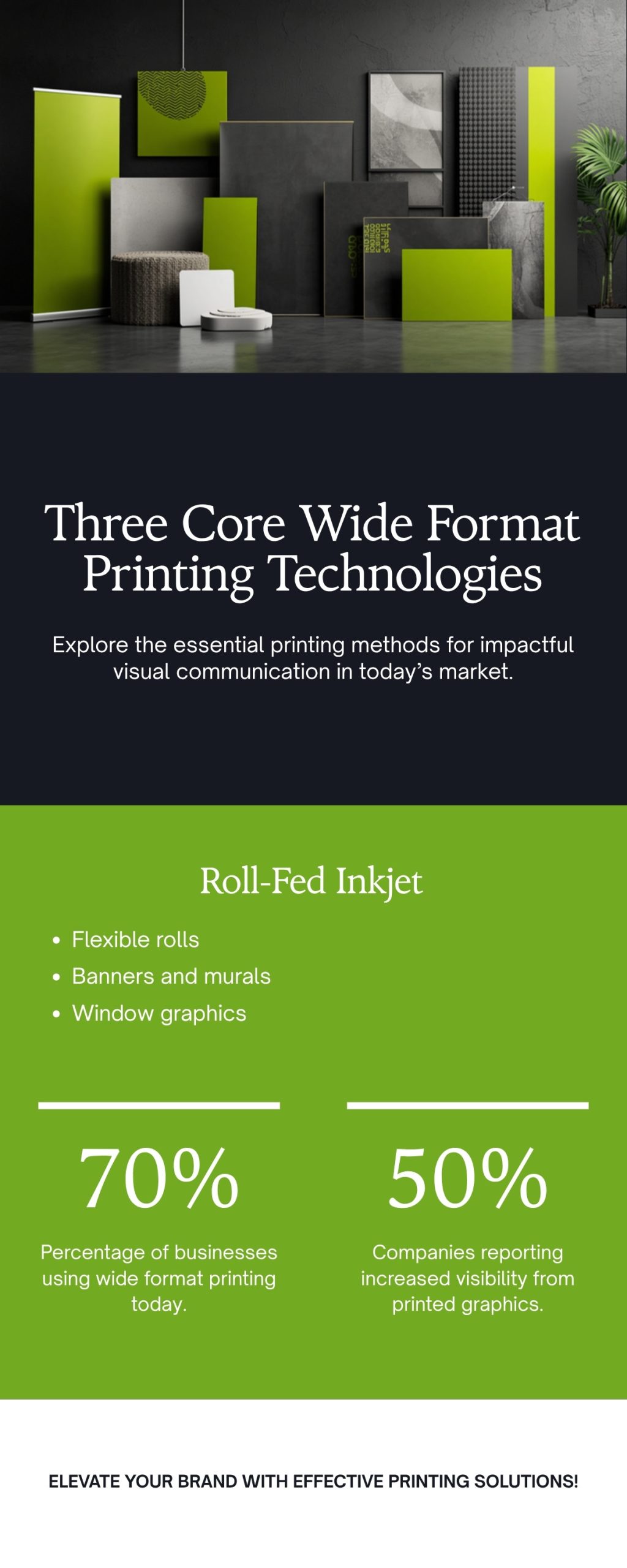
- Three core technologies cover most jobs: roll-fed inkjet, dye-sublimation for fabric, and flatbed for rigid boards
- Smithers forecasts the global print market at $834.3 billion in 2026, with digital’s share still climbing
What Is Wide Format Printing?
Wide format printing is any printing done on equipment built for output wider than a standard office or commercial document press can handle. Instead of letter-sized sheets, these printers feed rolls of vinyl, fabric, or paper, or print directly onto rigid boards. The result: graphics measured in feet and metres, not centimetres.
Think of it as the difference between printing a report and printing a storefront. A document printer produces brochures, letterhead, and booklets. A wide format printer produces the banner above the trade show booth, the mural across the office wall, and the graphics wrapping a downtown construction site.
The machines differ in more than size. Wide format printers use ink systems designed for durability, colour vibrancy at a distance, and adhesion to unusual materials: vinyl, polyester fabric, acrylic, foam board, and glass films among them. In our Richmond Hill facility, the same client project often spans both worlds, with business cards running on one press while their event backdrop runs on wide format equipment across the services floor.
If your graphic needs to be seen across a room, a street, or a convention hall, you’re in wide format territory. Planning a project like that? Book a complimentary project consultation and we’ll help you scope it.
Wide vs Large vs Grand Format: A Spectrum, Not a Standard
Here’s the honest answer: these terms describe a size spectrum, and the industry has never agreed on exact cutoffs. Different print shops draw the lines in different places, so treat any “official” number you read online with some skepticism. What matters is the general progression from wide to large to grand.
Wide format generally covers roll-fed printing that exceeds document sizes: posters, banners, and graphics in the range you could still carry through a door.
Large format is often used interchangeably with wide format, though many shops use it for bigger output: wall murals, full window coverage, and oversized displays. Our large format printing page covers this tier of work in depth.
Grand format sits at the top of the spectrum: building banners, stadium graphics, and hoarding runs that stretch across an entire city block. These jobs usually involve printing in panels or tiles that installers seam together on site.
Does the label matter when you’re buying? Not much. A good print partner asks about your finished dimensions, viewing distance, and installation surface, then picks the right equipment. The terminology is shorthand for printers, not a spec sheet for clients.
How Do the Main Wide Format Technologies Work?
Three technologies handle the majority of wide format work: roll-fed inkjet, dye-sublimation, and flatbed printing. Each pairs with different materials, which is why understanding them in plain English helps you brief a print shop well. No chemistry degree required.
Roll-Fed Inkjet: The Workhorse
Roll-fed inkjet is the technology most people picture. A wide printer draws material from a roll, and print heads lay down ink as the media advances. It handles vinyl, paper, and specialty films, which makes it the engine behind banners, vinyl printing projects like murals and floor graphics, and most window films.
Dye-Sublimation: Colour Inside the Fabric
Dye-sublimation uses heat to bond colour directly into polyester fabric rather than sitting on top of it. The payoff is soft, vibrant fabric graphics that fold for shipping and resist scuffing. It powers nearly everything on our fabric printing page, from stretch displays to event backdrops.
Flatbed: Printing Straight Onto Rigid Boards
Flatbed printers skip the roll entirely. The material lies flat on a bed while the print heads pass over it, so you can print directly onto foam board, acrylic, aluminum composite, and other rigid substrates. That’s how rigid signs, display panels, and many point-of-purchase pieces are made without mounting a printed sheet afterward.
Where Is Wide Format Printing Used? An Applications Tour
Almost anywhere a brand needs to be seen at scale. Signage genuinely moves revenue: a University of Cincinnati Economics Center study found businesses that improved their signage reported sales, profit, and transaction increases of roughly 10 percent (UC Economics Center, 2012). Here’s where wide format earns that return.
Banners and Step-and-Repeat Backdrops
Event banners are wide format’s most familiar face, and the step-and-repeat backdrop is its red-carpet cousin. Toronto’s event calendar keeps these in constant demand, from galas to product launches. Our complete step and repeat banner guide covers sizing, logo spacing, and fabric versus vinyl for photography.
Fabric Displays and Silicone Edge Graphics
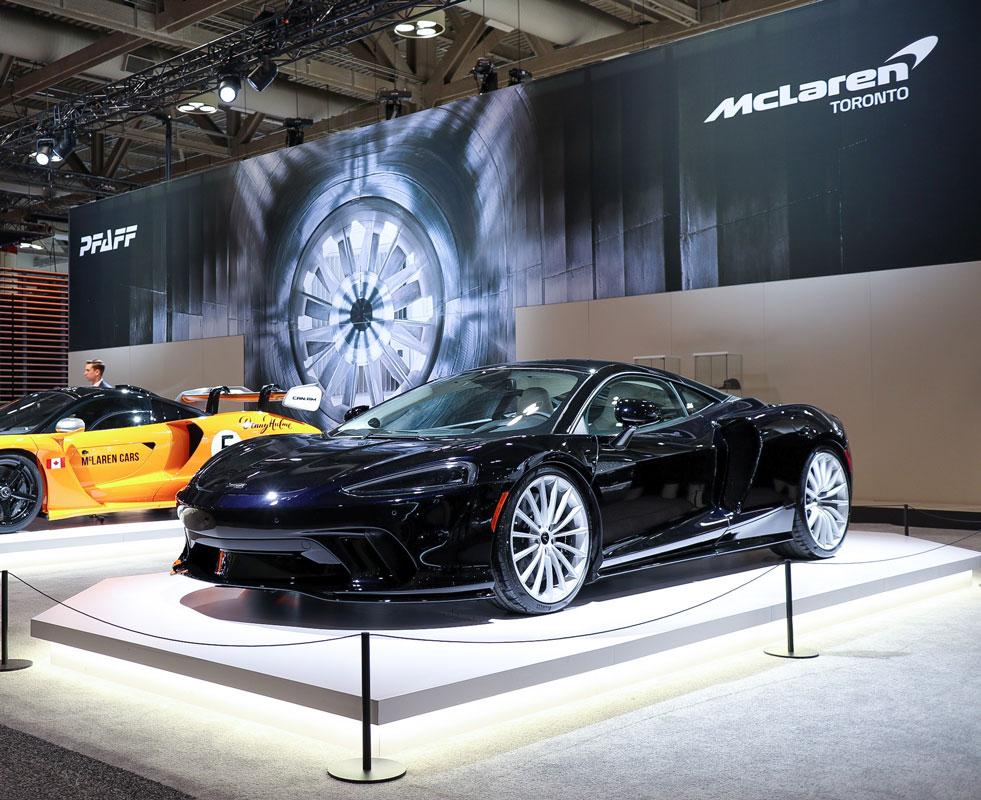
Fabric has taken over trade show and retail display work, and the exhibition industry it serves has largely recovered: CEIR’s Q2 2025 Index put attendance at just 3.7 percent below 2019 levels, the strongest-recovering metric (CEIR via IAEE, 2025). Silicone edge graphics, fabric prints that tuck into slim frames for a clean edge-to-edge look, lead the shift. We explain the system in our SEG explainer.
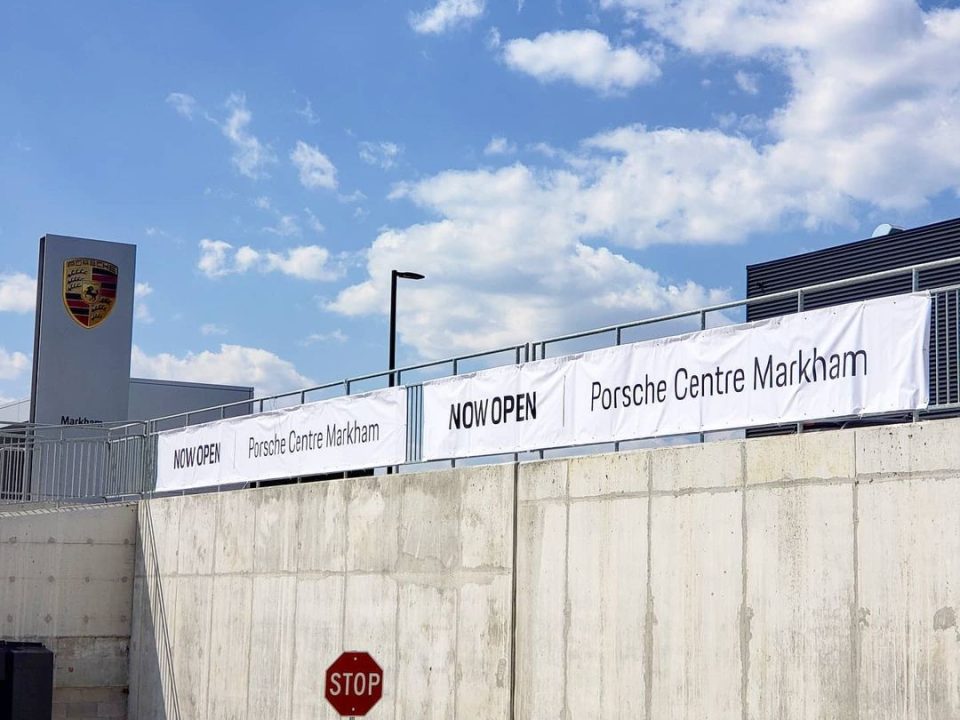
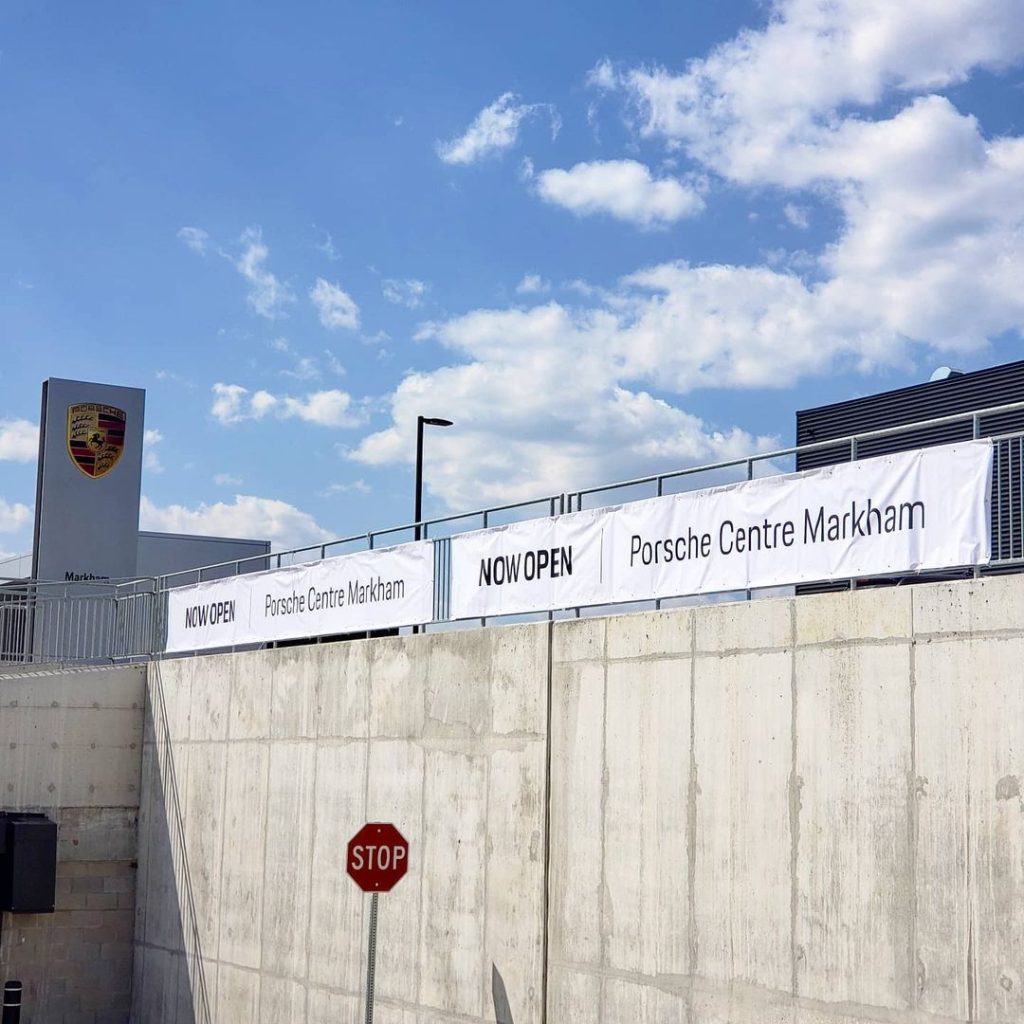
Some of our favourite work sits in this category, like the large fabric displays we’ve produced for automotive showrooms.
Wall Murals and Interior Branding
Printed wall murals turn blank office and retail walls into brand assets, and they install far faster than hand painting. We walk through materials, design, and installation in our business wall murals guide.
Window Graphics and Perforated Film
Storefront glass is advertising space hiding in plain sight. A FedEx Office survey found 76 percent of American consumers had entered a store they’d never visited before based on its signs (FedEx Office, 2012). Window graphics range from simple lettering to full-coverage displays, while perforated window film shows graphics outside and preserves the view from inside.
Posters and Retail Signage
Posters remain the fastest, most affordable wide format product for promotions, menus, and campaigns. Details on sizes, stocks, and finishing live on our poster printing page.
Point-of-Purchase Displays
POP displays put your message at the exact moment of purchase decision: shelf, counter, and floor. Flatbed printing makes them possible on rigid, freestanding materials. See our POP displays page for formats retailers use most.
Construction Hoarding Graphics
With cranes on nearly every GTA skyline view, construction hoarding has become prime brand real estate. Grand format panels turn mandatory site barriers into block-long marketing. Our construction hoarding graphics guide covers the branding opportunity and durability demands.
Why Does Print Keep Delivering?
Because physical visibility keeps producing results that digital channels struggle to match. Out-of-home advertising, which depends heavily on wide format printing, reached a record $9.46 billion in US revenue in 2025, up 3.6 percent year over year and marking 19 consecutive growth quarters (OAAA, 2026).
Audiences notice, too. A Nielsen study for the OAAA found 90 percent of US travellers noticed out-of-home advertising in the past month, and 66 percent of smartphone users took some action after seeing an OOH ad (Nielsen/OAAA, 2019). Those are American studies, but the behaviour they describe plays out on Toronto streets every day.
Meanwhile, the production side keeps shifting toward digital equipment. Smithers projects digital printing’s share of global print value rising from 17.2 percent in 2021 to 21.6 percent in 2026 (Smithers, 2021). In our experience that shift favours buyers: digital wide format means short runs, fast changeovers, and versioned graphics without the setup costs older processes carried. Physical media isn’t fading. It’s getting easier to buy well.
How Do You Choose a Wide Format Printing Provider?
Start with three questions: is the work produced in-house, can they show installed projects similar to yours, and do they handle installation? Wide format quality lives in the details (colour matching across panels, clean seams, materials suited to the surface), so a shop that controls production end to end has fewer places for a job to go wrong.
Viewing distance matters more than raw resolution, and material choice matters more than either. A provider who asks where the graphic will live before quoting is a provider who has hung graphics before. Ask to see real installs, not just renders.
We’ve written a full local buyer’s guide in how to choose a print shop in Toronto, covering the questions worth asking and the red flags worth heeding. C17 Media has produced wide format work from our Richmond Hill facility since 2010 for more than 40 recognized brands, including Ferrari, Porsche, Mercedes-Benz, and BMW.
Frequently Asked Questions About Wide Format Printing
What is wide format printing in simple terms?
Wide format printing is printing on equipment built for oversized output, using rolls of material or rigid boards instead of standard sheets. It produces banners, wall murals, window graphics, posters, displays, and hoarding panels, anything meant to be read across a room or a street rather than at arm’s length.
What’s the difference between wide format and large format printing?
Very little in practice. Many print shops, ours included, use the terms interchangeably. Some reserve “large format” for bigger output and “grand format” for building-scale work, but there’s no universal industry standard. Describe your finished size and application to your printer, and let them match the right equipment.
What materials can wide format printers use?
A broad range: vinyl and adhesive films, banner material, paper, polyester fabrics, and rigid substrates such as foam board, acrylic, and aluminum composite. Roll-fed machines handle flexible media, dye-sublimation handles fabric, and flatbed printers print directly onto boards. Material choice usually follows the installation surface and environment.
Is wide format printing good for outdoor use?
Yes, with the right pairing of ink and material. Outdoor banners, window graphics, and construction hoarding are core wide format products built to face weather. Durability depends on the material, the ink system, and the finishing, which is why it’s worth telling your printer exactly where the graphic will live.
Why is signage worth the investment for a business?
The research is consistent. A FedEx Office survey found 68 percent of consumers believe a store’s signage reflects the quality of its business, and 52 percent were less willing to enter a store with poorly made signs (FedEx Office, 2012). Your graphics are a first impression.
How big is the printing industry today?
Larger than most people assume. Smithers forecast the global print market would reach $834.3 billion in 2026, with digital printing’s share of value growing from 17.2 percent in 2021 to 21.6 percent in 2026 (Smithers, 2021). Wide format is among its most visible segments.
Does C17 Media handle installation as well as printing?
Yes. We manage projects from file preparation through production and installation across the Greater Toronto Area, and we ship for clients across Canada. Walls, windows, retail environments, events, and construction sites each demand different installation skills, so we scope that alongside the print itself.
Putting Wide Format Printing to Work
Wide format printing covers everything from a single poster to a city-block hoarding run, and the right technology depends entirely on your material, size, and setting. The fundamentals in this guide, plus the linked guides on each application, should give you enough to brief any print shop with confidence.
If that shop happens to be in Richmond Hill, even better. Request a complimentary project consultation, call us at 905-597-2178, or email hello@c17media.com and the C17 Media team will help you choose the right format, material, and finish for your project.