
Digital vs. Offset Printing: What’s the Difference?
May 4, 2026
3M DI-NOC Architectural Film: The Complete Guide
May 25, 2026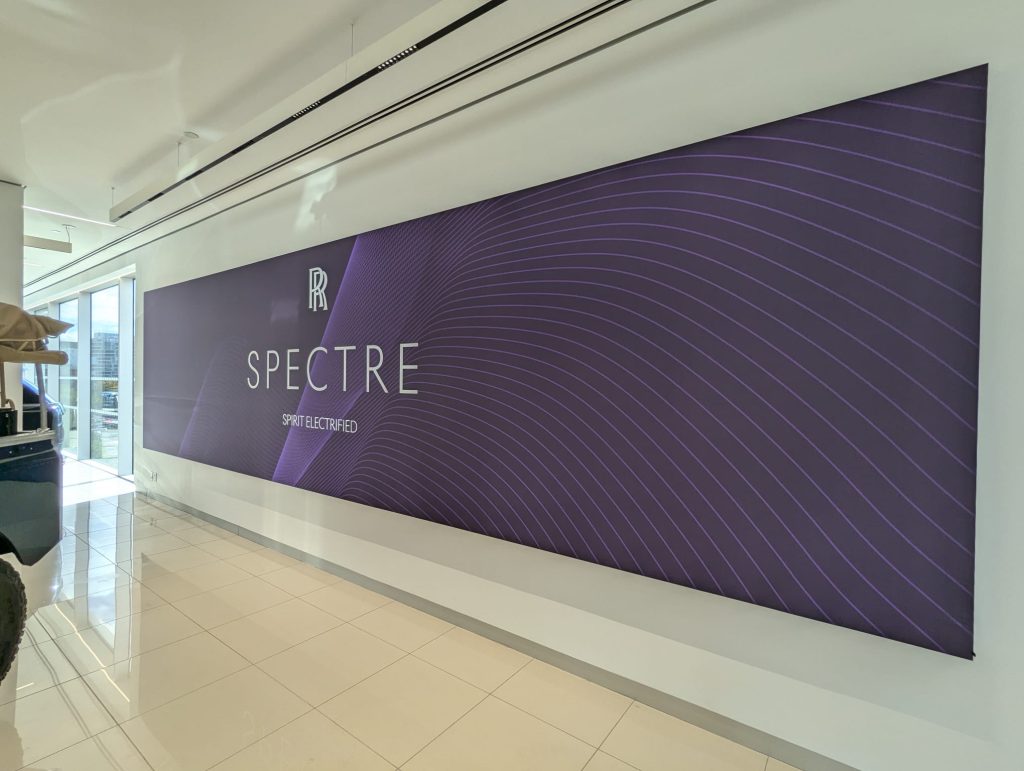
Look closely at the big backlit graphics in almost any new retail fit-out and you’ll notice something missing: the frame. The image runs edge to edge, drum-tight, with no visible hardware holding it. That’s a silicone edge graphic, or SEG, and it has quietly become a go-to display system for retail walls and trade show booths alike. There’s a reason presentation matters this much: 68% of consumers believe a business’s signage reflects the quality of its products or services (FedEx Office, 2012). This guide explains what SEG actually is, how the fabric-and-frame system works, why retail switched, and how to design artwork that takes advantage of it.
Key Takeaways
- SEG is dye-sublimation-printed fabric finished with a thin silicone strip that slots into a grooved aluminum frame (Vispronet).
- The frame is the long-term investment; the printed fabric swaps out by hand, no tools required.
- Fabric folds flat for shipping and works beautifully with backlighting, which is why retail and trade shows adopted it.
- 68% of consumers say signage reflects a business’s quality (FedEx Office, 2012).
What Are Silicone Edge Graphics?
Silicone edge graphics are dye-sublimation-printed fabric displays finished with a thin silicone strip that wraps the edge of the fabric and slots into a groove in an aluminum frame. As Vispronet puts it, “you end up seeing more graphic and less frame” (Vispronet). The result looks less like a sign and more like an uninterrupted printed wall.
You’ll also hear the format called SEG, fabric frame systems, or tension fabric displays. They all describe the same idea: a soft printed face held perfectly flat by hardware you barely see.
The printing method matters as much as the hardware. Dye sublimation uses heat and pressure to turn ink into gas and embed it directly into polyester fabric, printing first onto special transfer paper (Epson). Because the dye lives inside the fibres rather than sitting on top, the print won’t crack, peel or wash away over time. We explain the full process in our guide to dye sublimation printing.
Thinking about SEG for a retail space or booth? Book a complimentary project consultation and we’ll walk you through frame options before you commit to sizes.
How Does an SEG Frame System Work?
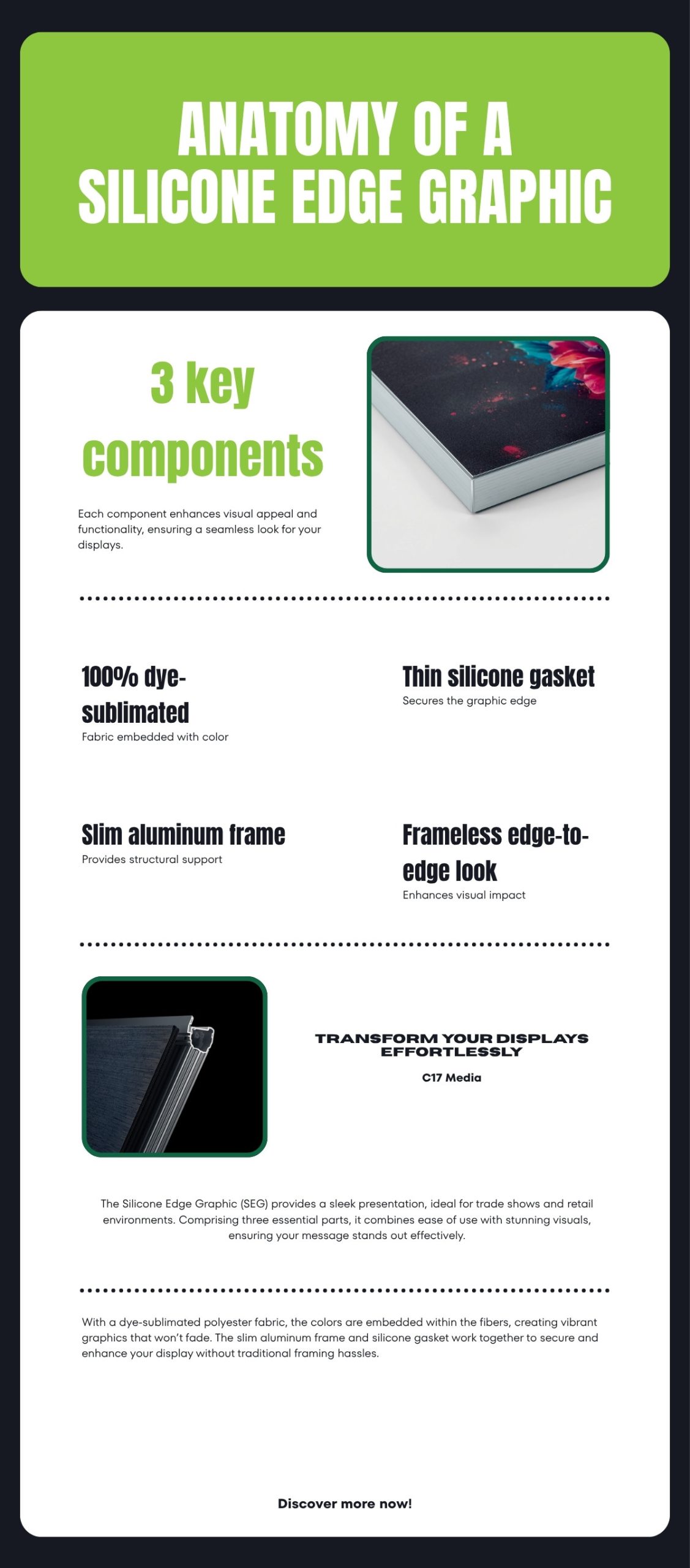
An SEG system has three parts: the printed polyester fabric, the silicone gasket sewn around its perimeter, and an extruded aluminum frame with a continuous groove machined into its face. Push the gasket into the groove, work your way around the frame, and tension pulls the fabric flat like a drum skin.
Start with the fabric. The graphic is printed slightly larger than the frame’s viewable area, then cut and finished with the silicone strip stitched to every edge.
The gasket is the clever bit. That thin silicone bead is firm enough to grip inside the channel yet flexible enough to press in by hand. No screws, no clips, no adhesive.
The frame does the quiet work. Extruded aluminum profiles keep the groove consistent along every edge, corner to corner, so tension stays even across the whole face. Profiles come in slim versions for wall graphics and deeper versions that house lighting.
Swapping graphics is the payoff. Pull the gasket free, fold the old fabric, press the new one in. Store staff can change a campaign without tools, and the frame never leaves the wall.
Why Did Retail and Trade Shows Switch to SEG?
Retailers and exhibitors switched to silicone edge graphics because the format solved four problems at once: visible hardware, backlighting, slow graphic changes, and shipping. Rigid panels and vinyl banners each handled one or two of those. SEG handled all four, which is why it spread from flagship stores to nearly every booth aisle.
The frameless look came first. Retail designers wanted large photographic walls without bezels interrupting the image, and a tensioned fabric face delivers exactly that.
Backlighting sealed the argument. Polyester fabric diffuses light passing through it, so an SEG face over an illuminated frame glows evenly instead of showing hot spots the way some rigid materials can. That’s why backlit fabric lightboxes now anchor so many storefronts and mall corridors across the GTA.
Speed matters on the show floor too. The exhibition industry has stabilized, with attendance the strongest-recovering metric at just 3.7% below 2019 levels (CEIR Q2 2025 Index, via IAEE). More shows means more booth setups, and a graphic that presses in by hand beats one that needs a hardware kit and a ladder crew.
Then there’s freight. A rigid graphic ships in a crate. An SEG fabric folds into a compact box, travels affordably, and steams smooth on site. For exhibitors moving between convention centres, that logistics difference alone justified the switch.
SEG Frame Formats: Wall-Mount, Freestanding, and Backlit
SEG frames come in three broad formats: wall-mounted profiles, freestanding structures, and illuminated lightboxes. The fabric-and-gasket principle is identical across all of them; only the extrusion and mounting change. Most programs mix formats, using the same artwork system across walls, floor units and glowing feature pieces.
Wall-mount frames are the workhorse. A slim extrusion fixes directly to drywall or slatwall, and the tensioned face turns any blank wall into a full-bleed graphic. They suit showrooms, offices, restaurants and retail interiors.
Freestanding frames add feet or a structural base, and many accept fabric on both sides for double-sided messaging. They work as room dividers, queue lines, booth backwalls, and floor displays alongside point of purchase displays.
Backlit lightboxes put illumination inside the frame behind the fabric. The printed face becomes a glowing image, which is the look most people picture when they think of premium retail graphics. Trade show exhibitors use the same format to stand out in a bright hall, often paired with a step and repeat backdrop for photos.
Keep the Frame, Reprint the Fabric: The Economics of SEG
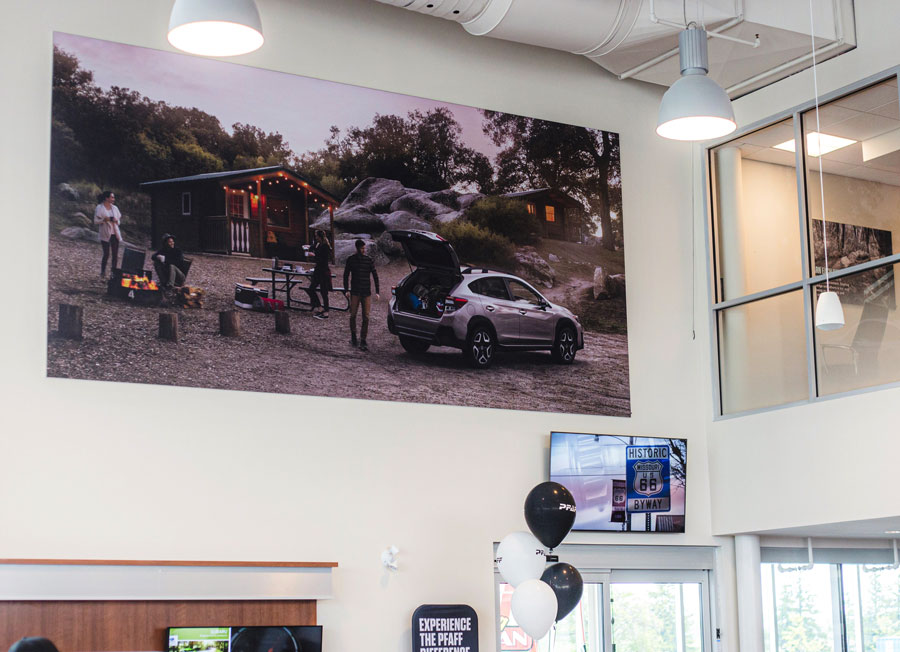
The economic logic of SEG is simple: the aluminum frame is a durable, one-time investment, and the printed fabric is the part that changes. When a campaign ends, you reprint only the fabric and press it into the existing frame. The hardware stays on the wall through season after season of new graphics.
Compare that with rigid signage, where every message change means producing, shipping and installing a whole new panel. With SEG, the recurring cost shrinks to a folded piece of printed polyester.
There’s an operational saving hiding in there too. Because swaps need no tools, graphic changes can happen before opening with in-house staff, no contractor visit required. Retail marketing teams can plan more frequent refreshes because each one is lighter to execute.
In our experience, that’s the real reason multi-location retailers standardize on SEG. Once frames are installed across a fleet of stores, rolling out a national campaign becomes a courier box per location rather than a construction project. Curious what that looks like in practice? Browse our recent work for fabric installations across retail and showroom environments.
How Should You Design Artwork for SEG?
Design SEG artwork with generous bleed, keep critical content away from the edges, and plan seam placement on very large spans. The fabric wraps into the frame groove, so the outer margin of your file disappears from view. Follow your printer’s template for the exact finished and viewable dimensions before you build the layout.
Bleed comes first. Extend backgrounds well past the trim so the wrapped edge never reveals unprinted fabric. Logos, headlines and faces should sit comfortably inside the safe area.
Think about seams on big spans. Printed fabric comes in fixed roll widths, so a very wide graphic may need panels sewn together. A good production team places those seams where the design hides them, in a colour transition or away from a face, rather than through the focal point.
Respect the medium’s strengths. Dye sublimation produces rich, continuous colour embedded in the fibre (Epson), which flatters photography and bold gradients. Designing for a backlit frame? Review artwork with illumination in mind, since transmitted light can shift how colours read compared with a lit-from-the-front wall.
When in doubt, ask for a proof. Our fabric printing team checks files against the frame spec before anything hits the press.
SEG Systems in the GTA: What C17 Media Supplies
C17 Media supplies complete SEG systems: dye-sublimation-printed fabric graphics, the aluminum frames they tension into, and professional installation across the Greater Toronto Area. We’ve produced large format printing for more than 40 recognized brands since 2010 from our Richmond Hill facility, including showroom fabric installations of the kind pictured above.
One supplier for fabric and frame matters more than it sounds. When the printer also specs the hardware, the finished graphic actually fits the groove, tension sits even across the face, and reprints years later still match the original frame.
We serve retail fit-outs, dealership showrooms, offices and trade show exhibitors across Toronto, Richmond Hill, Markham and the rest of the GTA, with reprint programs for teams that refresh graphics on a schedule.
Frequently Asked Questions About Silicone Edge Graphics
What does SEG stand for?
SEG stands for silicone edge graphics: fabric prints finished with a thin silicone strip that wraps the edge and slots into a groove in an aluminum frame (Vispronet). The tensioned result shows more graphic and less frame, which is the format’s whole appeal.
What fabric is used for silicone edge graphics?
Polyester. Dye sublimation, the printing process behind SEG, works only on polyester fabrics or polymer-coated surfaces because the ink turns to gas and embeds into the material (Epson). That embedded dye is why SEG prints won’t crack or peel.
How do you change the graphic in an SEG frame?
By hand, without tools. Pull the silicone gasket out of the frame groove, fold the old fabric away, then press the new graphic’s edge into the channel, working corner to corner. The frame stays mounted the entire time, so a graphic change is a hand task, not a service call.
Can SEG frames be backlit?
Yes, and backlighting is one of the format’s biggest draws. Deeper frame profiles house internal illumination behind the fabric, and the polyester face diffuses that light into an even glow. Backlit SEG lightboxes are now a standard fixture in retail interiors and trade show booths.
How large can a silicone edge graphic be?
Very large. Because fabric panels can be sewn together, SEG faces can span entire feature walls well beyond a single roll width. On big spans, good production planning places seams where the artwork conceals them. Frames are modular too, so long runs assemble from multiple extrusion sections.
Is SEG better than a vinyl banner for trade shows?
For a booth you rebuild show after show, usually yes. SEG fabric folds flat for shipping, steams smooth on site, swaps without tools, and presents a frameless, tensioned face. Vinyl still earns its place outdoors and in wet conditions, where a coated banner is easier to wipe down.
Does C17 Media install SEG systems?
Yes. We supply the complete package across the GTA: printed fabric, frames and installation, plus reprints when your campaign changes. Contact us to talk through wall-mount, freestanding or backlit options for your space.
See More Graphic, Less Frame
Silicone edge graphics won retail over for practical reasons: a frameless tensioned face, even backlighting, hand-swappable graphics, and fabric that folds into a shipping box. The frame is the investment; the print is the refresh. Get the artwork bleed and seam planning right, and the system rewards you with a display that looks built-in rather than bolted on.
C17 Media produces complete SEG systems, from dye-sublimated fabric to frames and installation, for retailers, showrooms and exhibitors across Richmond Hill, Toronto and the GTA. Send us your wall dimensions or booth plan and we’ll come back with frame and fabric recommendations, no obligation.
Book a complimentary project consultation, call 905-597-2178, or email hello@c17media.com. We’re in the shop Monday to Friday, 9:00 to 5:30.