
3M DI-NOC Architectural Film: The Complete Guide
May 25, 2026
Construction Hoarding Graphics: Branding GTA Building Sites
June 8, 2026
Look closely at the graphics in a modern showroom, a trade show booth, or a flagship store, and you’ll notice the best-looking ones usually aren’t vinyl. They’re fabric. Matte, saturated, and stretched drum-tight across frames with no visible hardware. Much of that fabric comes off one process: dye sublimation printing, which uses heat and pressure to turn ink into gas and embed it directly into the material (Epson). The colour doesn’t sit on the surface. It becomes part of it. This guide explains how sublimation actually works, how it differs from printing on top of a material, what it can and can’t print on, and why it has quietly taken over event backdrops, retail displays, and soft signage. We’ve been printing fabric for GTA brands since 2010, so we’ll keep it practical.
Key Takeaways
- Dye sublimation uses heat and pressure to turn ink into gas that embeds into the substrate itself (Epson).
- It works only on polyester fabrics or polymer-coated surfaces; cotton and uncoated materials won’t take the dye.
- Because the dye lives inside the material, prints won’t crack, peel, or wash away over time.
- Fabric’s matte surface photographs without glare, which is why displays, backdrops, and soft signage rely on it.
What Is Dye Sublimation Printing?
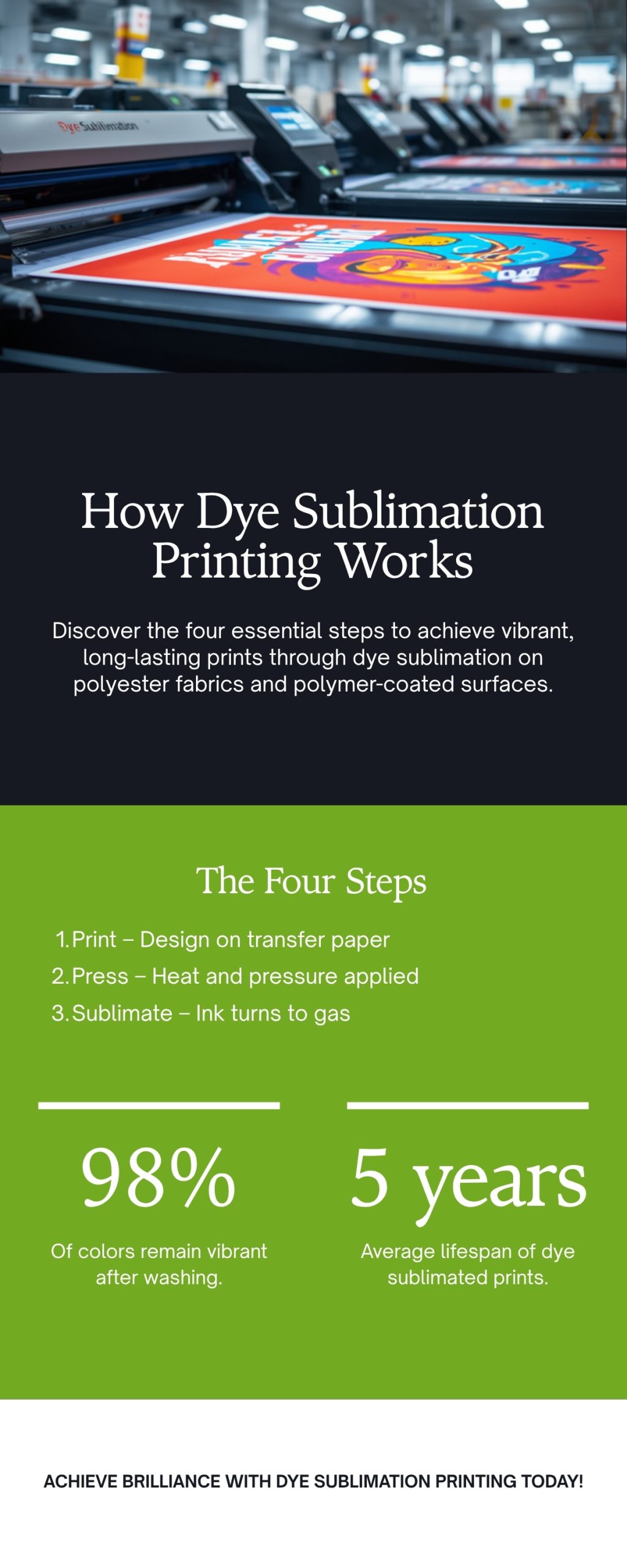
Dye sublimation printing is a transfer process that uses heat and pressure to turn solid ink into gas, which then embeds itself into the material being printed (Epson). The design prints first onto special transfer paper, then moves to the substrate under a heated press. The colour ends up inside the material, not on top of it.
The name comes from chemistry. Sublimation describes a solid turning straight into a gas without ever becoming a liquid. That’s exactly what the ink does under the press: it vaporizes, penetrates the material, and locks in as the surface cools.
So the workflow has two distinct stages. First, a wide format printer lays the design down on transfer paper, in reverse. Second, that paper meets the fabric inside a heat press, where temperature and pressure do the actual work. What comes out the other side isn’t a coated sheet. It’s a dyed one.
Planning a fabric display and not sure sublimation fits? Book a complimentary project consultation and we’ll walk you through material options before you commit to anything.
How Is Sublimation Different From Printing On a Surface?
Conventional printing lays ink on top of a material. Dye sublimation puts the colour inside it. Because the dye is embedded rather than sitting on the surface, sublimated prints won’t crack, peel, or wash away over time (Epson). That one difference explains nearly everything else about the process.
Think of a painted fence versus stained wood. Paint forms a film that weathers, chips, and eventually flakes off. Stain soaks in, so the colour lasts as long as the wood does. Surface printing behaves like paint. Sublimation behaves like stain.
The practical payoff shows up in handling. A sublimated banner folds into a bag, gets steamed smooth on site, and survives event after event, because there’s no ink layer to crease or scratch. Sublimated fabric can even go through a wash without losing its image.
Sublimation is one method among several in the wide format printing family, and each has its lane. Solvent and UV printing put durable ink on vinyl and rigid boards. Sublimation owns textiles. A good large format printing shop runs both and matches the process to the job.
What Can and Can’t You Sublimate?
Dye sublimation works only on polyester fabrics or polymer-coated surfaces (Epson). The gas needs polymer to bond with. Cotton, uncoated paper, bare wood, and raw metal simply won’t hold the dye, no matter how hot the press runs.
That constraint sounds limiting. In practice, it isn’t. Polyester display textiles come in a huge range of weights and weaves: stretch fabrics for tension frames, flag material, backlit fabric for light boxes, and heavy display polyester for backdrops. Every one of them sublimates beautifully.
Polymer-coated rigid goods extend the process beyond textiles. Coated panels and boards accept the same gas-and-embed transfer, which is how sublimated photo panels and hard signage get made.
What about everything else? Natural fibres and uncoated surfaces need a different process. Wall murals, window graphics, and floor decals are typically printed on vinyl, where the ink is engineered to sit on the surface and stay there. Neither method is better. They’re built for different materials.
Why Sublimation Dominates Fabric Displays
Fabric displays win on camera and up close, and sublimation is the reason. The printed textile keeps its soft matte surface, so lighting diffuses instead of bouncing back as glare. The colour reads deep and continuous because it’s inside the weave, not layered on top. And the print survives folding, shipping, and repeated installs.
Glare is the underrated factor. Trade show halls and showrooms are lit aggressively, from overhead rigs to camera flashes. A glossy surface fires those lights straight back at the viewer. Matte sublimated fabric just absorbs and softens them, which is why photographers consistently prefer shooting against it.
Presentation quality isn’t cosmetic, either. In a FedEx Office survey, 68% of consumers said signage reflects the quality of a business, and 52% were less willing to enter a store with poorly made signs (FedEx Office, 2012). A wrinkled, glaring display sends a message. So does a taut, saturated one.
There’s a logistics case too. Fabric folds small, ships light, and steams back to smooth on site. For a display that travels between events or rotates between stores, that difference compounds with every move.
Where Sublimated Fabric Shows Up: SEG, Backdrops, Flags
Sublimated fabric has become a go-to material across trade show and retail display work, and that world has stabilized. The CEIR Q2 2025 Index found the exhibition industry stable, with attendance the strongest-recovering metric at just 3.7% below 2019 levels (CEIR, via IAEE). More attendees means more displays, and a growing share of them are fabric.
Silicone edge graphics lead the category. An SEG print is sublimated fabric finished with a thin silicone strip that tucks into a slim aluminum frame, giving retail walls and booths a frameless, tensioned face. We cover the system fully in our guide to silicone edge graphics, and it pairs naturally with point of purchase displays on the retail floor.
Event backdrops are next. Sublimated fabric diffuses camera flash, which makes it the smart choice for media walls; our step and repeat banner guide covers sizing and logo spacing in detail.
Then come the movers. Flags and tension fabric structures flex constantly in wind and handling, exactly the conditions that destroy a surface-printed film. Embedded dye doesn’t mind. Hanging banners, backlit light box fabric, and the broader soft signage category round out the list: anywhere print needs to be big, light, and packable.
A Dealership Showroom, Wrapped in Fabric
Some of our favourite fabric work never leaves the building it was made for. For one dealership showroom install, we produced large sublimated fabric graphics tensioned across the interior walls, turning plain architecture into a continuous branded backdrop for the vehicles on the floor.
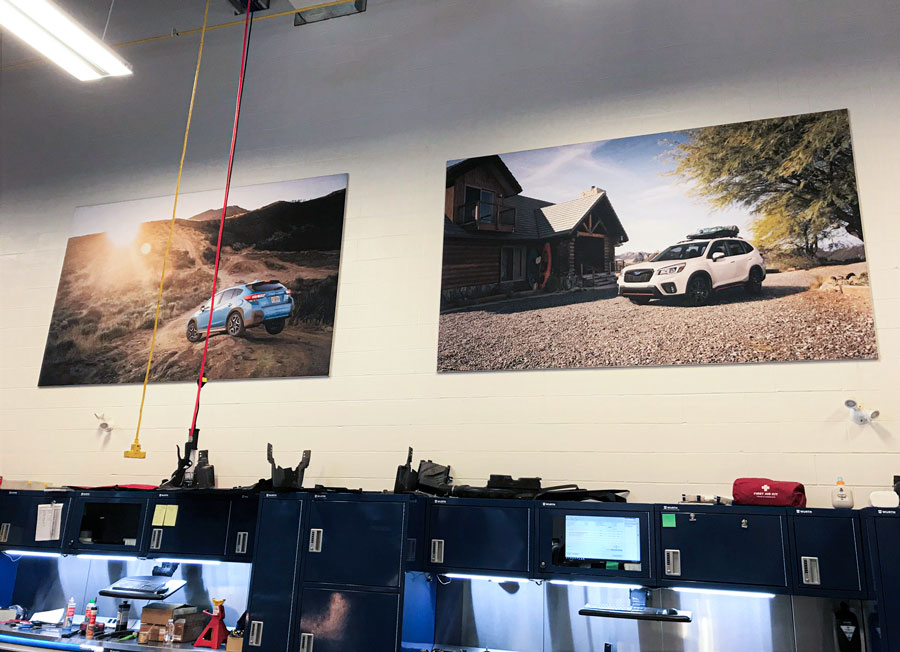
Why fabric for a space like that? Scale and light. Showrooms are walls of glass and polished floors, with sunlight moving through all day. Vinyl at that size risks visible seams and shifting glare. Tensioned sublimated fabric reads as one clean, matte surface from every angle, morning to closing.
There’s a lifecycle argument too. When the campaign changes, the frames stay on the wall and only the fabric swaps out. In our experience, that’s what wins facilities managers over: the second graphic change costs a fraction of the first install.
C17 Media has produced fabric printing for more than 40 recognized brands since 2010, from our Richmond Hill facility out across the GTA and Canada. You can browse more installs in our recent work.
Frequently Asked Questions About Dye Sublimation Printing
What is dye sublimation printing in simple terms?
It’s a transfer process. Your design prints onto special transfer paper, then a heated press applies heat and pressure, turning the ink into gas that embeds into the material (Epson). The colour ends up inside the fabric rather than sitting on its surface.
Can you dye sublimate cotton?
No. Sublimation works only on polyester fabrics or polymer-coated surfaces, because the vaporized dye needs polymer to bond with (Epson). Cotton and other natural fibres won’t hold the dye. Jobs on natural or uncoated materials call for a different print method entirely.
Do sublimated prints crack or peel?
No. Because the dye is embedded in the material rather than layered on top, sublimated prints won’t crack, peel, or wash away over time (Epson). That’s why fabric displays can be folded, shipped, steamed, and reinstalled repeatedly without visible wear.
What is transfer paper and why is it needed?
Transfer paper is the intermediate carrier in the process. The printer lays your design onto the paper in reverse, then the heat press sandwiches paper against fabric. Under heat and pressure, the ink leaves the paper as gas and embeds into the polyester, leaving the finished image behind.
Is dye sublimation good for outdoor flags?
Yes, it’s the standard choice. Flags flex, snap, and fold constantly in wind, which is punishing for any print that sits on the surface. Sublimated dye lives inside the polyester fibres, so the image moves with the fabric instead of cracking away from it.
What is soft signage?
Soft signage is the industry term for signs printed on fabric instead of rigid board or vinyl: hanging banners, tension fabric displays, backlit light box graphics, and SEG walls. Nearly all of it is dye sublimated polyester, chosen for its matte finish, light weight, and packability.
How do silicone edge graphics relate to dye sublimation?
SEG is a finishing and mounting system for sublimated fabric. The printed textile gets a thin silicone strip sewn around its edge, which tucks into a groove in a slim aluminum frame. The result is a taut, nearly frameless graphic that swaps out by hand, without tools, when campaigns change.
Does sublimated fabric photograph better than vinyl?
For interior displays and backdrops, generally yes. The matte textile surface diffuses flash and overhead lighting instead of bouncing it back as glare, so logos and colours stay readable in photos. Glossy vinyl can throw hotspots directly into the lens, washing out the image.
Print That Lives Inside the Fabric
Dye sublimation is the rare process where the science explains the sales pitch. Heat and pressure turn ink into gas, the gas embeds in polyester, and the result is a matte, deeply coloured print that won’t crack, peel, or wash away. That’s why it owns fabric displays, from SEG retail walls to trade show backdrops to flags.
C17 Media produces sublimated fabric graphics, SEG systems, and complete display packages for organizations across Richmond Hill, Toronto, and the rest of the GTA. Send us your project details and we’ll recommend the right fabric, finishing, and hardware, no obligation.
Book a complimentary project consultation, call 905-597-2178, or email hello@c17media.com. We’re in the shop Monday to Friday, 9:00 to 5:30.